2026 is out, 2016 is in


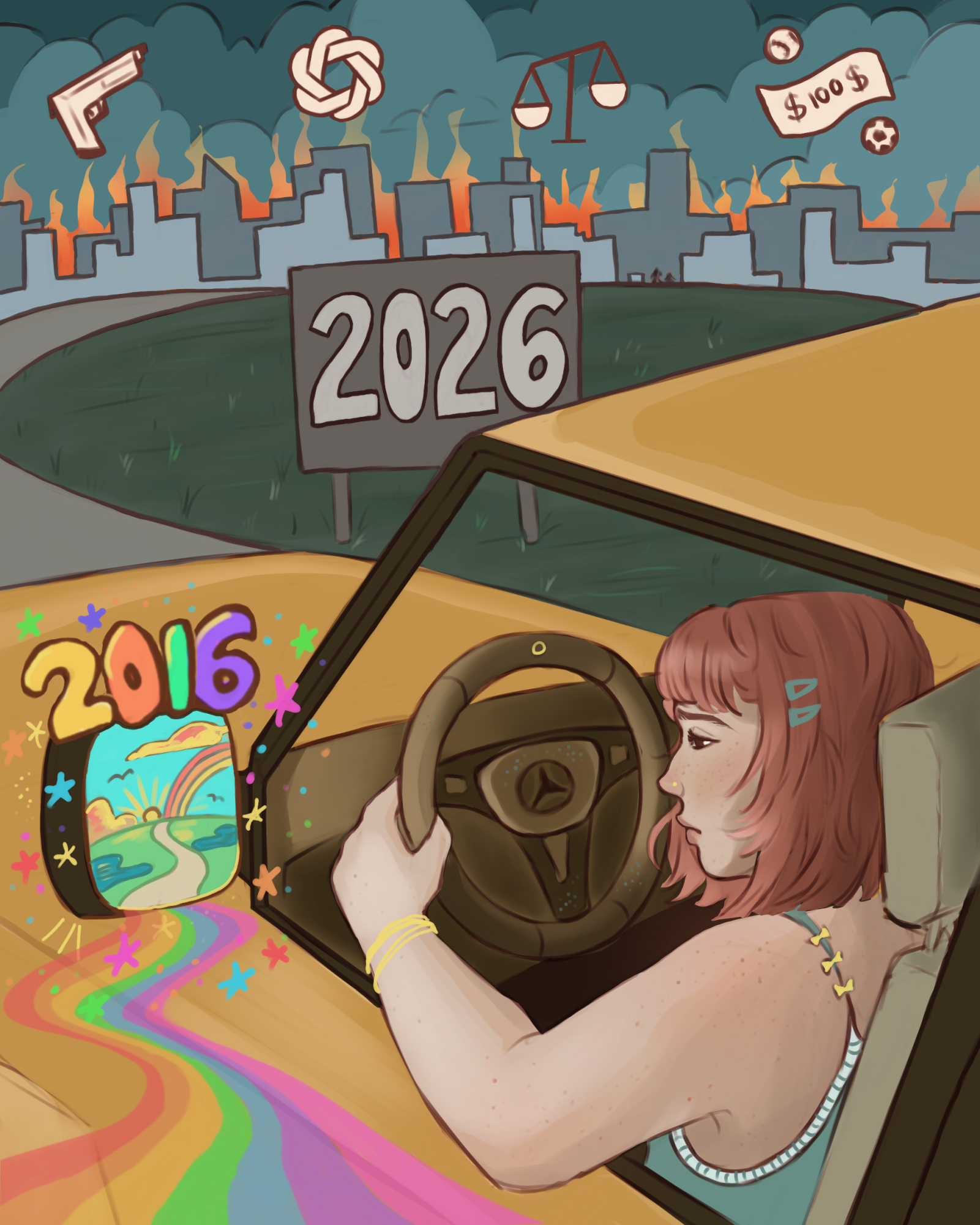
As the rest of the world looked forward to the new year on Jan. 1, Instagram users chose to look 10 years backward.
Overnight, the app’s feed was transformed from glossy, curated content to a stream of overly saturated, pink-and-orange-tinted selfies set to the familiar sounds of The Chainsmokers or Drake.
And just like that, it felt like 2016 again. Celebrities like Kylie Jenner and Selena Gomez leaned into nostalgia with throwback pictures of their own, captioned with statements like “you just had to be there.” Across the app, users followed suit, reviving old photos, filters and songs that defined 2016.
But why is 2016 making such a comeback? The revival of 2016 goes beyond the obvious 10-year anniversary and nostalgic trends — it reveals a longing for a time that felt much simpler politically, socially and culturally.
The summer of 2016 marked the end of the Obama era and the beginning of a political period marked by immense turbulence and division. U-High art teacher Devin Wideman considers 2016 to be the final year of political stability and unity, which is one of the reasons he believes Instagram users are choosing to embrace the year.
“That was the last year, I would say, in the United States, where we felt this sense of normalcy, however you would define that,” Mr. Wideman said. “I think, no matter what your political beliefs are, that since that election, things have gotten so much more extreme, and I think, as a country, we are so divided. Nobody wants to listen to anyone if you don’t agree with the person’s political beliefs, so I think that’s a huge problem.”
Mr. Wideman also thinks that the combination of the 2016 election and the coronavirus pandemic in 2020 propelled society into “unprecedented times,” and because 2016 was the final year before this turbulent period began, it is particularly nostalgic for people.
“COVID, in 2020, really changed things a lot, and then the last election as well, kind of going back to where we were in 2016. It sort of felt like, for a lot of people, we were stepping back,” Mr. Wideman said. “And so, for the last, let’s say, 10 years, we’ve been living in what they call ‘unprecedented times,’ and I think we’re all sick of living in it and we just want to live in precedented times.”
Senior Addy Johnson credits the nostalgia towards 2016 to a romanticization of the past and simpler politics.
“Now, there’s a lot of things happening that people aren’t necessarily happy about or are not necessarily, like, good things for our country specifically. So back then, like, sure the social political climate wasn’t necessarily as good as people probably think it was, but like, it was an easier time to be with each other before everything kind of started to implode,” Addy said. “The romanticization of the past is something that people definitely do.”
Mr. Wideman agrees with Addy that society has a tendency to reflect on the past with fondness and overlook the negative parts, and that in retrospect, 2016 seems simpler because life is so much heavier for people today.
“Here we are 10 years later, and the world does feel a lot more stressful. So I do think in a sense, times felt simpler, but it was still complicated. Life’s always been complicated,” Mr. Wideman said. “I think it’s just like the cliché expression ‘the grass is always greener.’ You don’t really appreciate the current time you’re in until the time has passed and things have gotten a bit heavier, and then you look back on it fondly. I’m sure things were complicated in 2016 because they always are, but it does feel like it was a simpler time.”
For senior Gaia Sperone, the fixation on 2016 is rooted in a desire to go back to a time with more physical media and creativity and less AI.
“There was a lot more dependence on physical media in 2016, and I think with the rise of AI and a lot of digital things, and just the nostalgia of having physical media and having human interaction and things like that is really pushing this trend forward,” Gaia said.
While the nostalgic Instagram posts have gradually disappeared from feeds, the feeling remains. 2016 is a time to remember, for better or for worse.
Americans will always associate 2016 with the pivotal presidential election, a major turning point in our recent history that defined most current high schoolers’ understanding of the political climate. It was 2016 when the phrase “Make America Great Again” was first blazoned across bright red baseball caps and subsequently entered popular culture.
That phrase, simply by virtue of the word “again,” is built on the premise of nostalgia and demonstrates its coercive power. President Donald Trump constructed his brand around the compelling concept of deterioration and renewal. But, even in criticizing the current administration, it’s important to resist rhetoric built on an ideal past.
Recently, there’s been a deluge of nostalgic social media posts — often featuring “Lush Life” by Zara Larsson — where millennials and Gen Z alike hearken back to the good old days of side parts, plastic chokers and matte lipstick. However, news articles at the time tell a different story. From the New York Times: “2016: Worst. Year. Ever?” and Slate “Is 2016 the worst year in history?”
Aside from various international disasters, well-loved celebrity deaths, and infamous presidential candidates, 2016 also marked the beginning of the “post-truth era.” In 2016, Oxford Dictionaries made “post-truth” their Word of the Year, defining it as the prioritization of emotions and personal belief over objective facts in shaping public opinion.
While we may have outgrown many of our mid-2010s sartorial and cultural fixations, we remain in the post-truth era. This trend toward nostalgia is the perfect example of that reality.
The real 2016 hardly resembled those grainy, sepia-filtered photos currently flooding our Instagram feeds. If we want to learn anything of value from that disastrous year, or those that followed, we need to resist the temptation to idealize the past.
Our current nostalgia is most often a longing for a more liberal moment, where harmless self-righteousness reigned supreme and the promise of a female president felt like the product of continual and inevitable progress. Now, Americans feel unsafe in major cities and our president casually threatens — and delivers — military interference, both domestically and internationally.
In the face of instability, lament offers few solutions. The past is a valuable advisory tool for our future only when we look upon it with a critical, discerning eye.
Quite honestly, I have little idea what we’re meant to be doing at this moment. What I think we can do is use precedent to the best of our abilities, even in unprecedented times. And, in truth, the very moment to which we now long to return is our most prescient example of the perilous political consequences of nostalgia.
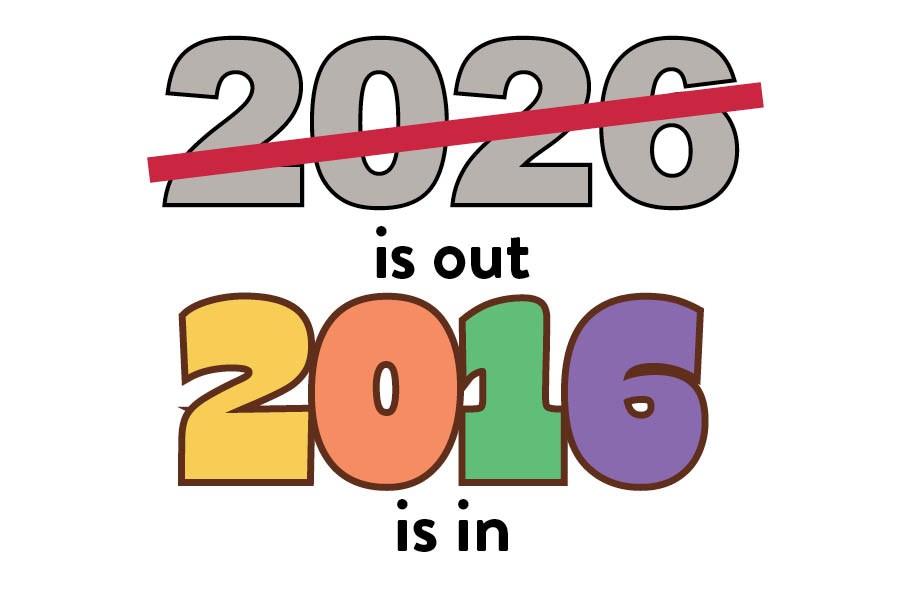
In the 10 years since 2016, major events have happened that have shaped lives and societies across the globe. Here are six defining moments of the past decade that continue to have ripple effects today.
COVID-19: When the first case of COVID-19 was reported in Wuhan, China, in December 2019, there was no sense of the scale of its eventual impact. Declared a pandemic in March 2020, COVID has since claimed over 7 million lives worldwide. COVID also fundamentally changed the lives of survivors. According to a poll conducted by the Pew Research Center, three-quarters of American adults say that COVID took a “toll” on their own lives, and for students, over a year of online learning disrupted social relationships and led to massive learning losses. Looking forward, only 4 in 10 American adults say that the United States would do better in a future health emergency.
ARTIFICIAL INTELLIGENCE: Since ChatGPT’s release in November 2022, AI has become ubiquitous in our lives. In 2025, the Pew Research Center reported that 27% of American adults use AI almost constantly. With continuous conversations around AI use, it is still unclear whether AI will mostly help or hurt society. A positive aspect of AI is its potential to make rapid, accurate diagnoses alongside health care workers. However, AI also has the potential to diminish human closeness, increase electricity demand and water consumption, and led to 55,000 job layoffs in 2025.
ADDICTIVE ALGORITHMS: In 2016, saying the word “TikTok” caused people to break out into the hit song by Kesha, not pull out their phones and click on the app that offers a personalized “For You” page. Since TikTok’s release in September 2016, the app has garnered just under 2 billion users worldwide. Other social media sites have emulated TikTok by designing ultra-curated algorithms that keep users online and engaged. AI-driven social media algorithms have evolved to capture our attention for hours on end. This content optimization has been proven to cause addictive behaviors, especially among teenagers.
GEOPOLITICAL CONFLICTS: In February 2022, after a months-long military buildup, Russia invaded Ukraine, targeting Ukrainian military assets and cities. Ukraine responded with drone attacks on Russian infrastructure, and since 2022, there have been over 53,000 civilian deaths. The Middle East has seen the escalation of the conflict between Israel and Palestinians, which has roots in the early 20th century. Most recently has been the Israel-Hamas War in Gaza that began when Iran-backed Hamas fighters killed more than 1,300 Israelis in October 2023. Since then, Israel has laid a complete siege on Gaza, killing 70,000 Palestinians and displacing over 1.9 million others. In October 2025, a ceasefire was reached between Israel and Hamas.
RACIAL RECKONING: When George Floyd, an unarmed Black man, was murdered by a white police officer in May 2020 in Minneapolis, massive protests sparked in countless U.S. cities. People across the world began to speak out against police brutality and expressed support for the Black Lives Matter movement. Following Mr. Floyd’s death, feelings of anger and sadness of the U.S. population increased to 38.4% and 38.1%, respectively, according to a Gallup Panel COVID-19 survey. The police officer who killed Mr. Floyd was convicted of second- and third-degree murder, and U.S. states have passed more than 140 new bills around law enforcement to curb police brutality.
ROE V. WADE OVERTURNED: In June 2022, through the Dobbs v. Jackson Women’s Health Organization case, the Supreme Court overturned Roe V. Wade, a case that guaranteed constitutional rights to people in every state to have an abortion before the point of fetal viability. Since then, abortion laws have been left to states to decide, and currently, 13 states have a total abortion ban. These bans disproportionately impact poor women, women of color and LGBTQ+ communities. Since the decision, many women have traveled to states across the nation to receive abortion care, most notably Illinois, which had a 49% rise in out-of-state abortions in 2023.
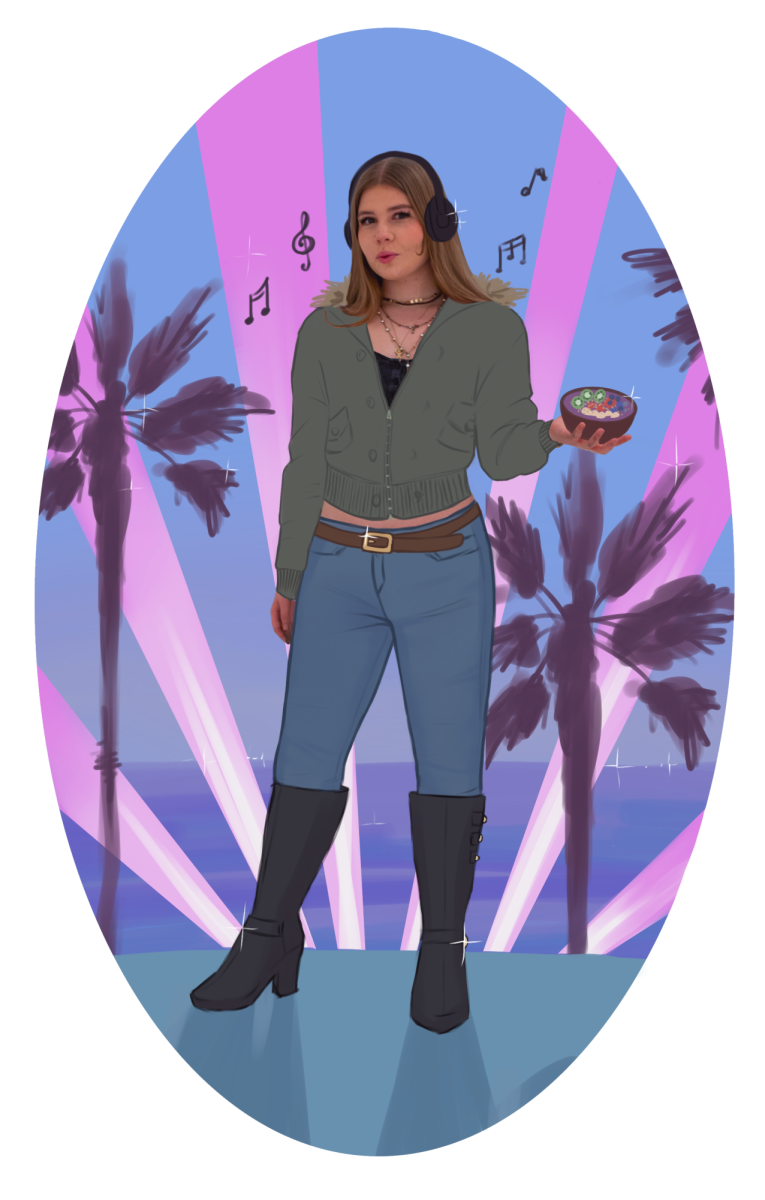
Many trends popular in 2016 have regained momentum through social media this year. Beyond simple nostalgia, these trends have reintroduced a more playful approach to life through clothing styles, food, music and more.
FILTERS: Filters are back. On Instagram, users are decorating their photos with vibrant presets from VSCO, a photo-editing app popular since its founding in 2011. Filters available on VSCO, including popular choices of A4, B1 and A6 (staples of the 2016 aesthetic) are adding warmth to the photos posted on platforms as well as providing a nostalgic feeling to modern social media users. Beyond VSCO’s color-tinting filters, Snapchat users have also returned to filter use in selfies exchanged between friends. Snapchat “lenses” can change your haircolor, turn your face into animals from a dog to a unicorn (if that’s your thing).
HYPE MUSIC: The music that is trending and regaining traction includes electro-hip hop music, popularly played in party settings as well as featured on the Musical.ly app, which evolved into TikTok. Recent playlists include hits by The Chainsmokers, Fetty Wap, and more specifically, songs featured in the album “ANTI” by Rihanna. Interestingly, people are again “fangirling” over familiar artists, including boy bands such as One Direction or Harry Styles. 2016 music trends have also returned through modern music made by newer artists, such as Zara Larsson. Ms. Larsson’s songs are trending on TikTok for their “2016 vibes,” fun beats and positive lyrics.
SKINNY JEANS AND BOOTS: Society saw the rise of “mom” style jeans in the early 2020s, a baggy style that gives a comfortable yet stylish look to the wearer. This year, skinny jeans are back in style. Whether high-rise, low-rise, detailed or cuffed, skinny jeans are making their comeback. In contrast to previously popular oversized styles, skinny jeans are tighter and stretchier. Increasingly, people can be seen pairing their skinny jeans with long, knee-high, boots in brown or black styles, another signature look of the 2010s.
BOLD MAKEUP: In recent years, the “clean-girl” makeup aesthetic has been popular through TikTok and Instagram. This style leans into subtle and glowy makeup products, ironically to achieve a “no makeup, makeup look.” Now, the makeup style popularized in 2016 is making its return. Seen on models and celebrities, notably Kylie Jenner, this look includes dramatic lip liner and thick foundation with lots of powder and eyeshadow swiped from the James Charles palette. This contrasts with “clean-girl makeup,” reclaiming bold makeup strokes instead of muted ones.
AÇAI BOWLS: Fruity açai bases covered in strawberries, bananas, chia seeds and peanut butter. Popular in 2016, and now in 2026 through their overwhelming presence on social media, these bowls are not only regaining dominance in the food market due to their delicious and fruity taste but also because of the nostalgia they bring. Marketed as healthy and antioxidant-rich foods, açai bowls provide variety and choices to consumers, while also bringing back classic “beach vibes,” regardless of the consumer’s location. Deep Purpl, an açai bar in Hyde Park’s Harper Court, has also become a favorite food spot for students at U-High.
BOMBER JACKETS: Functional, warm, stylish — what more could you ask for? Originally designed as “flight jackets” for pilots in World War I, bomber jackets can now increasingly be spotted on many young adults throughout the colder months. They can be found on modern clothing sites in rising commodities, coming in satin, wool and leather styles. Particularly when going to nice dinners, teenagers are choosing to opt out of previously trending puffers by switching to a bomber-style jacket for not only the style, but to achieve a vintage-inspired look.
Are you experiencing 2016 nostalgia, and if not why do you think many people are?
“I think it’s fun to relive 2016 through these trends, and when I see other people post on social media, I become nostalgic as well.”
— Julia Machado, ninth grader
“I’m not nostalgic for 2016 specifically, but I do feel nostalgia toward the past because of current events. 2016 was by no means perfect, but it was the last year before Trump came into office, and so it makes sense that people romanticize that year.”
— Morgan Shields, sophomore
“I think it’s definitely nostalgic, especially for a lot of people who are dissatisfied with the government and everything going on with America right now. I also think that 2016 was when social media was more fun and focused on fun, as opposed to now, when social media is a lot more stressful. There’s a lot more going into curating a particular page and wondering about how people will look at content.”
— Giovanni Nicolai, junior
“I think people are looking back at 2016 because it’s been ten years, and when it’s a new decade, people look back at the decade with fondness. For me, it was my freshman year of college at UC Berkeley, and it was a pivotal time because I was on my own for the first time with my family, I became Christian that year, and that year set the trajectory for the rest of my life. It was a big turning point for me.”
– Beatris Oyebolu, history teacher
“I don’t think I’m experiencing much nostalgia because I was 6 in 2016, but I do see that there’s a lot of people talking about it on social media. I think things just repeat themselves sometimes.”
— Liam Evans, sophomore
“I feel like there’s been a feeling of time flying by. It’s so hard to believe that 2016 was 10 years ago. 2016 was when I moved to Chicago and when the Cubs won, so that year was very happy, eventful and full of new experiences.”
— Serge Hayrapetyan, ninth grader
“I think it’s really cool because I hear a lot of people talking about how 2016 was really nice, even though I haven’t truly seen it myself.”
— Alexa Porter, ninth grader
“I honestly don’t remember 2016 much, but I guess social media at the time was more light-hearted, and now it’s cliquey and there’s a meanness associated with it. 2016 and the time period is considered less hostile.”
— Lyla Ruiz de Luzuriaga, junior
“I think it’s kind of funny to see 2016 nostalgia online, and it might represent young people’s need for nostalgia and thinking back to times that might have been better or more fun in the moment.”
— Rachel Xiang, senior
“I would say that generally, yes, I do have nostalgia for 2016, as it marked the year I moved to Chicago, so the year is memorable for leaving friends behind, falling in love with the city and joining the Lab community.”
— Whit Waterstraat, senior
“I guess it’s kind of escapism. People want to go back to things that they felt more comfortable in. If right now is a very scary time, it’s a certain kind of escapism.”
— Jimmy Yu, junior
— compiled by Maya Gauhar