
Widely regarded as Chicago’s hub for music venues, eclectic coffee shops and a plethora of thrifting options, Wicker Park offers the perfect environment for a day’s outing. Most of the neighborhood’s stores and restaurants line a stretch of North Milwaukee Avenue, from West Division Street to West North Avenue, passing through the iconic “Six Corners” intersection. Originally settled in the mid-19th century by German and Scandinavian immigrants, the North Side neighborhood has long been home to artists, musicians and small independent businesses. Though the area has seen significant gentrification in recent years, many beloved stores remain an integral part of the neighborhood’s character. Around a 30-minute drive from Hyde Park, Wicker Park retains a charmingly artsy and gritty energy.
1385 N. Milwaukee Ave.
This bustling restaurant with friendly service has been a staple in the Wicker Park community for almost 15 years. While the food is on the pricier side, their “chicmen and veggimen” ramen and pan-seared portobello mushroom appetizer are not to be missed. The ramen broth is perfectly salted. The mushrooms are soft without being rubbery, served in a tasty sauce with spring onions and a boiled egg. Sit at the booth to watch your food being chopped, sizzled and sauced.
1379 N. Milwaukee Ave.
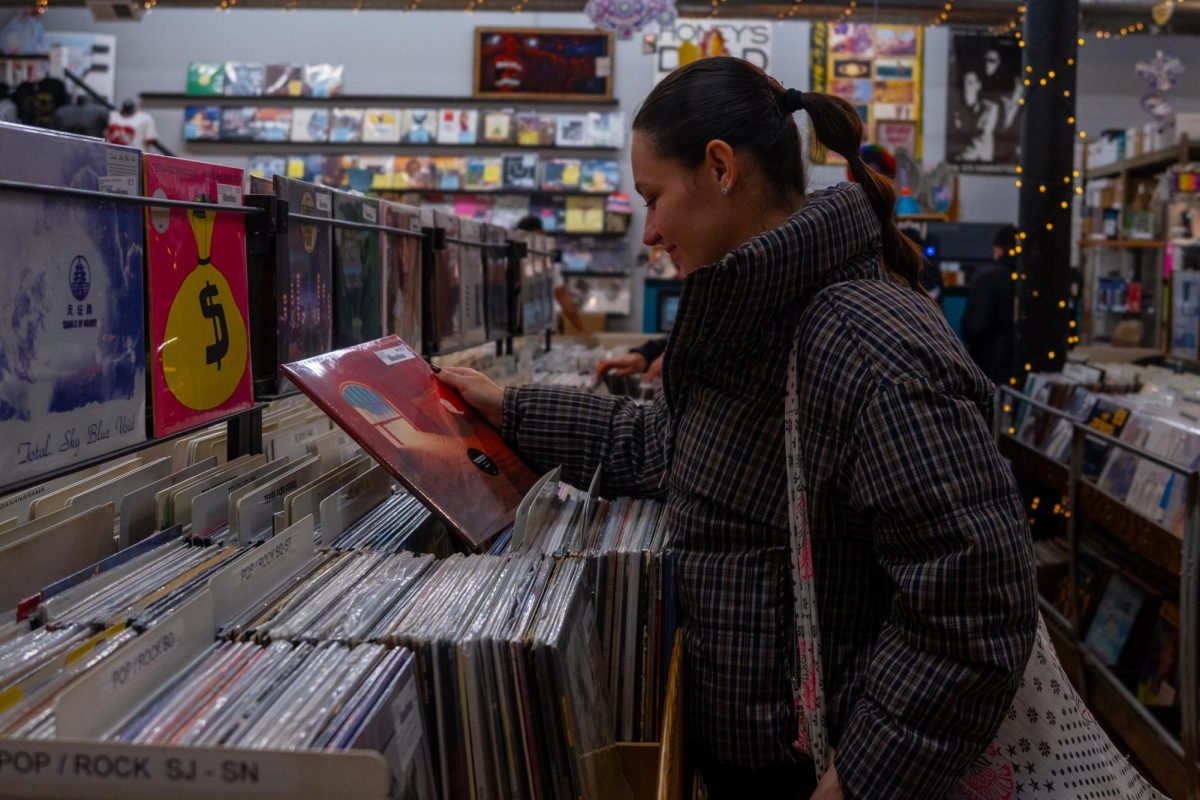
Right next to Oiistar sits an old-school store where fairy lights adorn the ceiling, retro funk music blasts from speakers and the walls are lined with all kinds of records. From classics such as Frank Sinatra and Deep Purple to more modern artists including Travis Scott and Charli xcx, Reckless Records, which opened its Wicker Park location in 2015, offers something for all customers and browsers alike. Be sure to also check out their large CD collection.
1507 N. Milwaukee Ave.
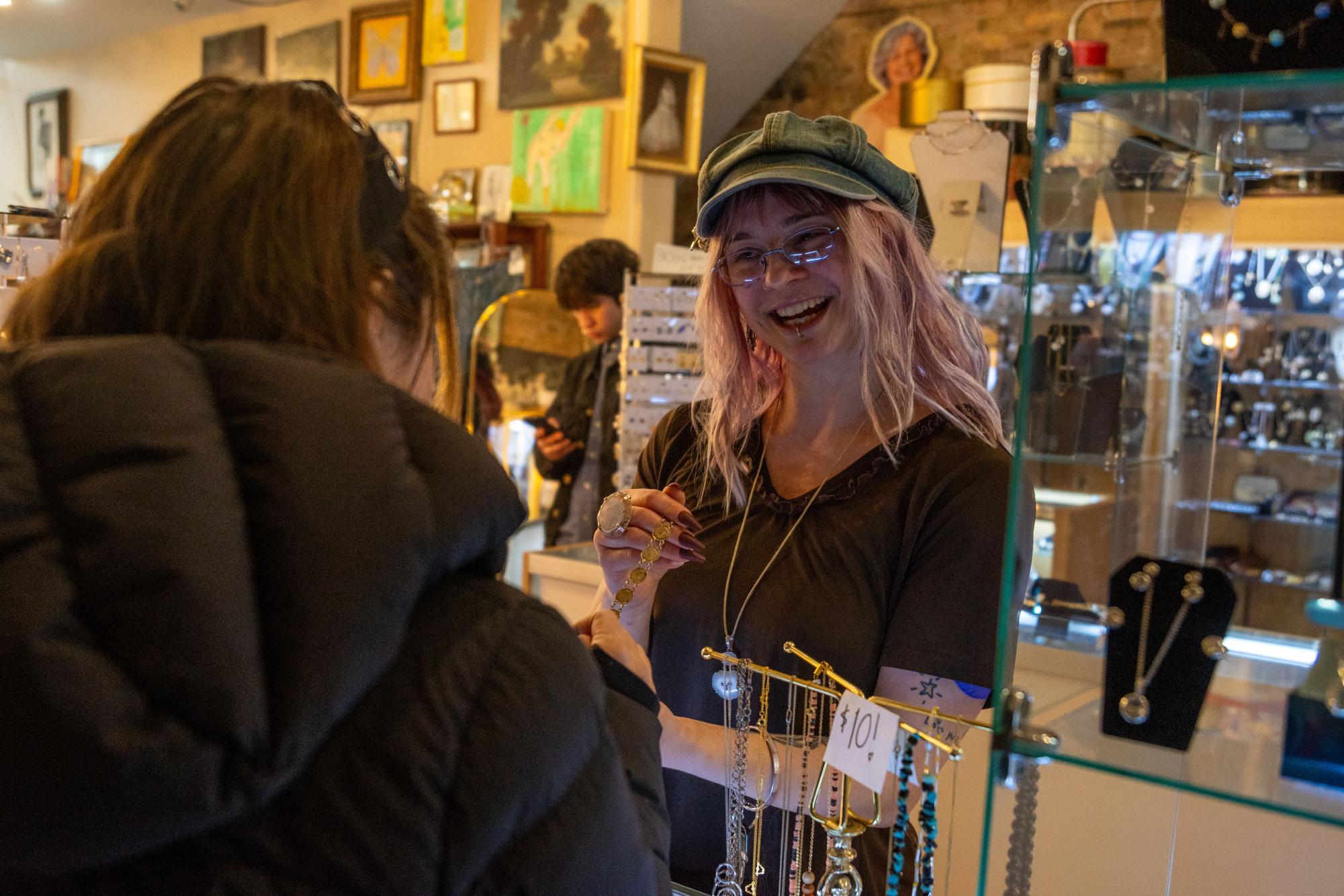
Wicker Park has a reputation for thrifting, and just five minutes from Reckless Records lies Vintage Underground, which has been in business for over 20 years and gets its name from its former location in a basement. Customers can choose from funky accessories such as dangly earrings, beaded necklaces, fur coats and leather bags. The store features a large clothing selection complete with ripped jeans and woolen sweaters. You can also drop off your jewelry to sell.
1551 N. Milwaukee Ave.
You won’t find Nikes or Converse in this store. John Fluevog sells edgy and art deco-inspired shoes — oversized boots, studded flats and blue cowboy boots — essentially anything but your average sneaker. The store opened its original location in 1999 across the street, where it was one of the first high-end retailers on Milwaukee Ave., before moving to its current location.
“When he started the store, John Fluevog noticed there were a lot of artists in Wicker Park,” said Jack Sparacino, who’s worked at the store for over 20 years. “I think because of the nature of our shoes and the funkiness of them, he thought it would be the perfect spot. The old location was a theater, and the store still has a few theater seats. Sparacino said, “There’s a little piece of the theater history in this store.”
1462 N. Milwaukee Ave.
If you’re looking for a place to take a little break and recharge, stop in at the iconic Wormhole Coffee, nearing its 15th anniversary. It’s fairly easy to miss from the outside, with only a “WH” in small neon blue letters, but the inside is lively and decorated with intriguing paintings, bumper stickers and even a retro full model car. The Ghostly Trio and vanilla bean latte are the most popular items, but equally delicious is their cold brew doughnut, drizzled with caramel and dumped in crumbled chocolate pieces.
1702 N. Damen Ave.
For a final neighborhood stop, visit this newly opened photo booth studio on the border between Wicker Park and Bucktown to capture some memories with your friends. For $7 and a half-hour wait, you can use devices from the 1940s to snap vintage black-and-white photos.
“We have over 50 machines in Chicago, in bars and such,” owner Anthony Vizzari said. “But in a lot of the places, the booth is secondary to the venue, whereas in this space, the experience is the photo booths themselves.”

Chicago’s Wicker Park is known for its vibrant nightlife and bohemian vibe, both of which have grown considerably more widespread in recent decades. However, with progress come a few issues: In the last 30 years, Wicker Park’s historically prevalent population of people of color has been mostly replaced by young, wealthy white people. While this has resulted in neighborhood-wide displacement, Wicker Park is still home to many artists and lasting antique sellers.
From the neighborhood’s development in 1837 by brothers Charles and Joe Wicker, Wicker Park served as a catalyst for manufacturing and brewing industries. After the Great Chicago Fire of 1871, the area was transformed from a sparsely populated rural area to an urban region, witnessing a boom in development. Because Wicker Park remained mostly unaffected by the fire, many city residents fled there for refuge, causing an influx of wealth and requests for fireproof construction. This demand turned the area into an architectural display, drawing attention as the rest of Chicago was rebuilt.
However, the neighborhood underwent another shift in the 1930s, when wealthier residents left, and poorer inhabitants took their place, starting a period of economic decline. Marking the end of its prosperous era of wealthy residents and industry, the Great Depression caused citywide business closure and reversion to a working-class neighborhood.
This depressive period, however severe, was short-lived. In the 1970s, revitalization and home restoration efforts began. In 1979, Wicker Park was named a National Historic District, and in 1991, Chicago named it a landmark. By the mid-1990s, the area became a hotspot for music and art, featuring landmarks like the Double Door.
But by the early 2000s, Wicker Park became a “poster child” for gentrification, with high rents forcing out longtime residents to favor predominantly young white people driving up property value. In 2012, Forbes named Wicker Park the fourth most hipster neighborhood in America, highlighting its transformation from diversity and social impact into an affluent epicenter, emphasized by its nearly 70% white population, the highest of any Chicago neighborhood.
While many have been forced out of Wicker Park, there are some long-standing stores enjoyed by residents, such as Una Mae’s, Myopic Books and store B vintage. The emergent “hipsterism” of Wicker Park has also developed an eccentric ambiance, an appealing atmosphere to inhabitants. The neighborhood also celebrates numerous cultural celebrations, including the Wicker Park Fest street festival in July.
Since its establishment, Wicker Park has faced many hardships, yet the city thrives through vintage shopping and lively nightlife. The neighborhood is very popular with young creatives, and is projected to become even more recognized in the coming years.