









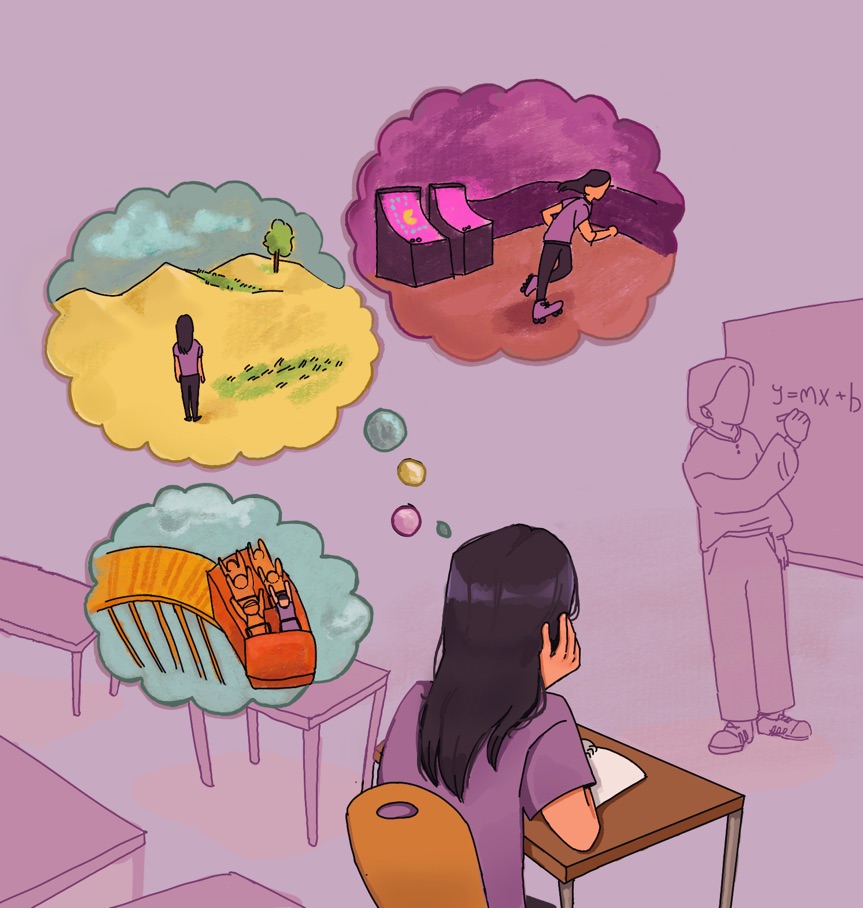









Earlier this year, I was taking a math test and suddenly something shifted: my hands shook, my breathing stopped and my eyes blurred. When the time for the test was up, my legs propelled me past history classrooms and down the first floor hallway. I didn’t consider that what I was feeling was physiological.
“It’s all in my head,” I thought.
But when I reached my counselor’s office and had calmed down, he told me something that made it make sense: I had experienced a panic attack.
Although sophomore students participate in activities and an assembly on How To Help A Friend — which functions as a wonderful and intentional framework for mental health education — programming should spend more time communicating what a struggle with mental health can feel like rather than just look like from another person’s perspective. The symptoms I felt were real, visceral and frightening — and if I’d known what was happening, I would’ve felt far less alone as I tried to catch my breath while speeding past history classrooms.
Because of school programming, many students are aware of the signs of struggle: withdrawal from community, constant mood swings or repeated substance use, just to name a few. These are things we’re trained to notice in other people, but mental health struggles are just as, if not more, difficult to identify when you’re the one experiencing them. Internally, they can be brushed off as an overreaction or just a one-off incident — not as something that is a real struggle.
This self-doubt is common among young people. In a 2024 study published in the Journal of Child and Family Studies, researchers found that among their participants, young people with early signs of depression or anxiety, all felt self-doubt and a fear of being denied. That fear, along with the uncertainty about whether what they’re feeling is “serious enough” to matter, prevents students from seeking help.
Of course, one risk of adding information about internal symptoms is that it can lead to spiraling over a self-diagnosis, but the solution is not to avoid these conversations altogether. We can still teach about the difference between stress and anxiety, or experimentation and addiction, while also naming the feelings that accompany these struggles.
Mental health education should not stop at teaching students how to recognize struggles in others. When people can name what they’re struggling with, asking for help becomes far less frightening.

