




















Artificial intelligence: humanity’s greatest breakthrough or its greatest threat? “The AI Doc: Or How I Became an Apocaloptimist” confronts that unsettling question head-on by asking serious questions about the future of humanity under the influence of AI.
Released in March and directed by Daniel Roher, the documentary addresses fascinating questions about AI and the evolution of society, but it spends too much time repeating the same concerns, which causes the documentary to lose momentum. Available on Amazon Prime Video and the Apple TV Store, the film explores society’s growing dependence on AI and the uncertainty surrounding its future.
The documentary is most effective during its opening sections as it explains and gives viewers a good foundation on basic questions such as how AI became so powerful and fast. The film explores the rapid competition among companies such as Open AI, Anthropic and Google to build increasingly powerful AI systems, alongside comparisons between how nations approach AI development and a modern nuclear arms race. “The AI Doc” helps viewers grasp the significance and impact of AI, while showing how countries view it as a source of military and technological power.
Furthermore, it provides snippets of easily understandable comparisons to break down a complicated topic. One expert warns that there is “more regulation on selling a sandwich to the public than there is on building potentially world ending generative AI.” The comparison simplifies a complex issue and emphasizes how quickly AI development is advancing compared to government oversight.
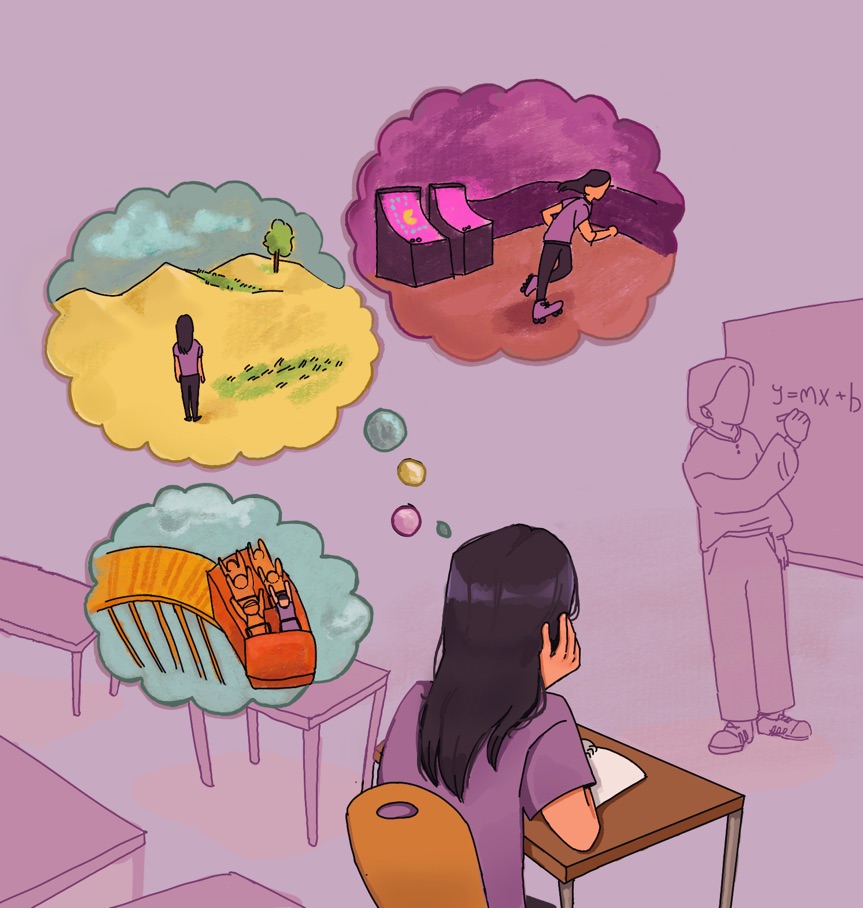
Additionally, the editing of many animated scenes of the “anxiety mountain” and watercolor paintings creates a tense but playful atmosphere as it reflects the uncertainty surrounding AI. With quick cuts, dramatic music and layered visuals, the documentary brings more diversity and catches the viewers attention, while also giving viewers a break from the long stretches of interviews.
However, the film struggles to maintain that same energy throughout the documentary. Many interviewees repeat nearly identical points about AI being powerful, dangerous and inevitable. By the middle of the documentary, the repetition becomes difficult to ignore. Instead of digging deeper into complex ethical questions, it often circles back to the same warning and analytics said by different interviewees using slightly different wording.
One of its most interesting recurring questions asks interviewees whether they would feel comfortable raising children in a world increasingly controlled by AI. The film emphasizes this divide by cutting between clips of nearly every interviewee who agrees and disagrees, reinforcing the contrasts but also making the discussion feel repetitive. While both sides are clearly split and thoroughly explained, the documentary never dives deeper into the analysis of each side’s argument.
This documentary is not a groundbreaking dive into artificial intelligence, but it is an accessible starting point for viewers who want to form their own opinions, even if it occasionally repeats itself.
