




















Bright neon colors light up the room where videos of women with hot pink lipstick in daring outfits and bold makeup line the walls. A cacophony of Latin American and Jamaican music fills the hall as the ears begin to adjust to the fast-paced music with a staccato structure.
This is the Museum of Contemporary Art’s new exhibit “Dancing the Revolution: From Dancehall to Reggaetón,” exploring Caribbean cultural identity through self-expression and political revolutionary movements.
The exhibit’s description reads: “Dancehall is much more than a musical genre; it’s a physical space, a civic institution and a unique creative culture and economy,” with scholar Donna P. Hope depicting it as a “living canvas of Jamaican society,” while reggaeton begins to mix it with Latinx culture and music as well.
The museum evokes a sense of hope in the viewer with stories such as the dancehall queens, female performers crowned in competitive dance and fashion events. In the early 1990s, the dancehall queens emerged to combat the violent and misogynistic attitude within the dancehall community. Certain female dancehall artists, such as featured collage artist Alberta Whittle, play on gender stereotypes such as hypersexualizing themselves in a form of protest and empowerment.
Edra Soto, a Chicago-based artist from Puerto Rico featured in the exhibit, described the exhibit as an exploration of dance and music in the form of the social rebellion.
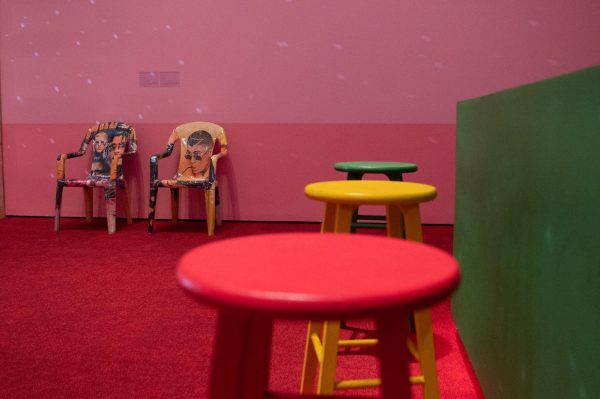
“The exhibition highlights the lives of individuals who dedicated everything to their music because they had nothing left to lose,” Ms. Soto said in an interview with the Midway. “For them, music and dance were vital acts of survival and resilience.”
Ms. Soto said culture, heritage and Puerto Rican identity are all factors that shape how she shows her art. Famous in particular for her monobloc chairs (like the ones on Bad Bunny’s “DtMF” album cover), she uses her socio-economic background to show the Puerto Rican reality in contrast to the “American Dream.”
“The persistence of Spanish heritage within cultural identity still threatens working-class Puerto Ricans’ self-worth,” she said. “Reshaping that cultural identity with symbols that characterize and build a presence for working-class citizens became a self-imposed assignment. I think of my work as a representation of self-value.”
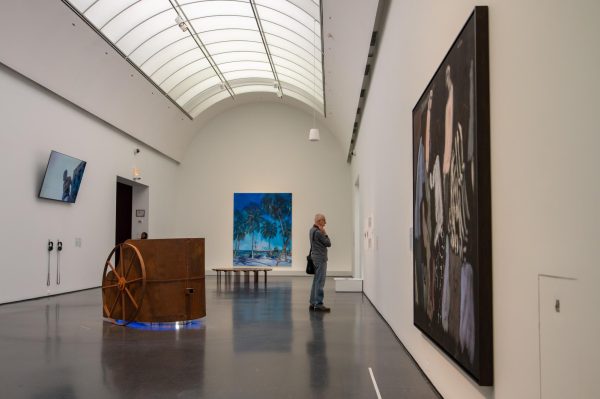
A wooden speaker system with blue lights gleaming at the bottom, blasting Jamaican music, takes up the center space of the first room in the exhibit. This is artist Michael Richard’s testament to how the roots of dancehall come from the creation of the Jamaican sound system in the 1950s, which gave a voice and community to the marginalized Jamaican people. This led to a rise in revolutionary Jamaican media such as with the short film “Territories” by Isaac Julien and artists such as Denzil Forrester discussing the racial tensions faced in 1970s Britain through paintings.
Museum patron Mona Bapillon, originally from the Caribbean, said it was important to see the culture expressed in all these different ways. The vibrant, rhythm-driven Jamaican music mixed with the bright reds, whites and blues of the billowing Puerto Rican flag held up in dissent fill the final room of the exhibit. Women photographed by supakid in their underwear are protesting with one woman dancing with writing on her shirt saying: “¡Si no puedo perrear, no es mi Revolución!” — “If I can’t dance reggaeton, it’s not my revolution!”
