









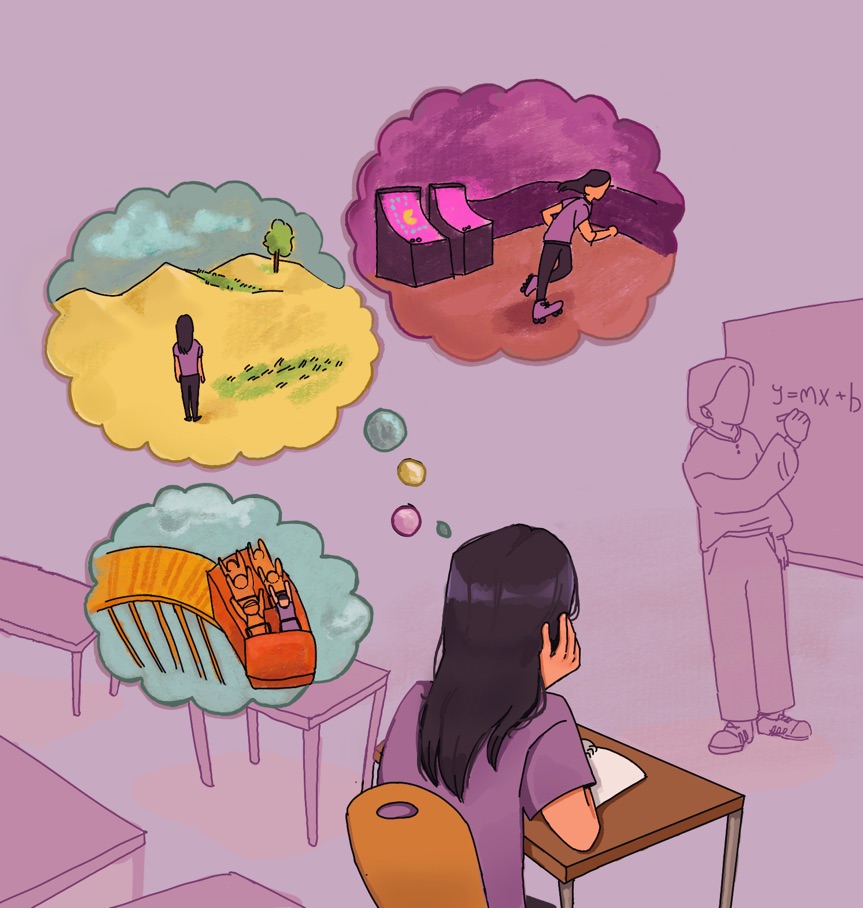










Imagine it’s the night before the chemistry final, and while you need to study, you have 30 math problems and a history prompt to respond to. Knowing that you can’t possibly do all three, you ask ChatGPT. In an instant you have a study guide, all of your math answers laid out and your English prompt answered.
Asking artificial intelligence for help with your homework may feel easy and harmless. But behind each generated response is a warehouse-sized data center that uses millions of gallons of water every year for cooling. In 2023, U.S. data centers directly consumed about 17.4 billion gallons of water for their cooling, a figure expected to double by 2028, according to a report from the Lawrence Berkeley National Laboratory. The majority of this is water that would have otherwise been used for farming or household use.
While AI can help with everything from homework to tutoring, it puts a substantial strain on limited freshwater resources. With global warming becoming more of a pressing issue, any water waste or extra carbon emissions that can be prevented should be. By restricting our use of AI, we can limit the technology’s environmental effects.
There are 5,426 data centers in the United States, with one-fifth of them being used for AI, according to one estimate. Experts predict AI will account for 70% of total data center demand in just five years. This growth is especially concerning in regions struggling with drought, where every gallon of water matters.
While the Great Lakes region isn’t arid, only 1% of the water in the lakes themselves is replenished each year. That could create a water crisis in the Midwest, especially because Illinois and Ohio are ranked fourth and fifth for states with the most data centers.
It’s not only big corporations draining water resources. Every time you ask ChatGPT a homework question or for help with studying, water is being used. ChatGPT-3 consumes 500 milliliters of water for 10-50 medium-length responses, according to a 2023 study.
By 2030, use of AI is expected to more than triple. If our water usage grows accordingly, the impact could be devastating.
Artificial intelligence will shape our future, but it should not drain the water that supports our communities. Students, educators and everyday consumers have the ability to be more cautious about how often they turn to AI. Instead of turning to AI first, we can contact our teachers for help and use more responsible studying tactics that don’t require cramming and asking AI at the last moment. Responsible use now can help protect the water resources for future generations.
