




















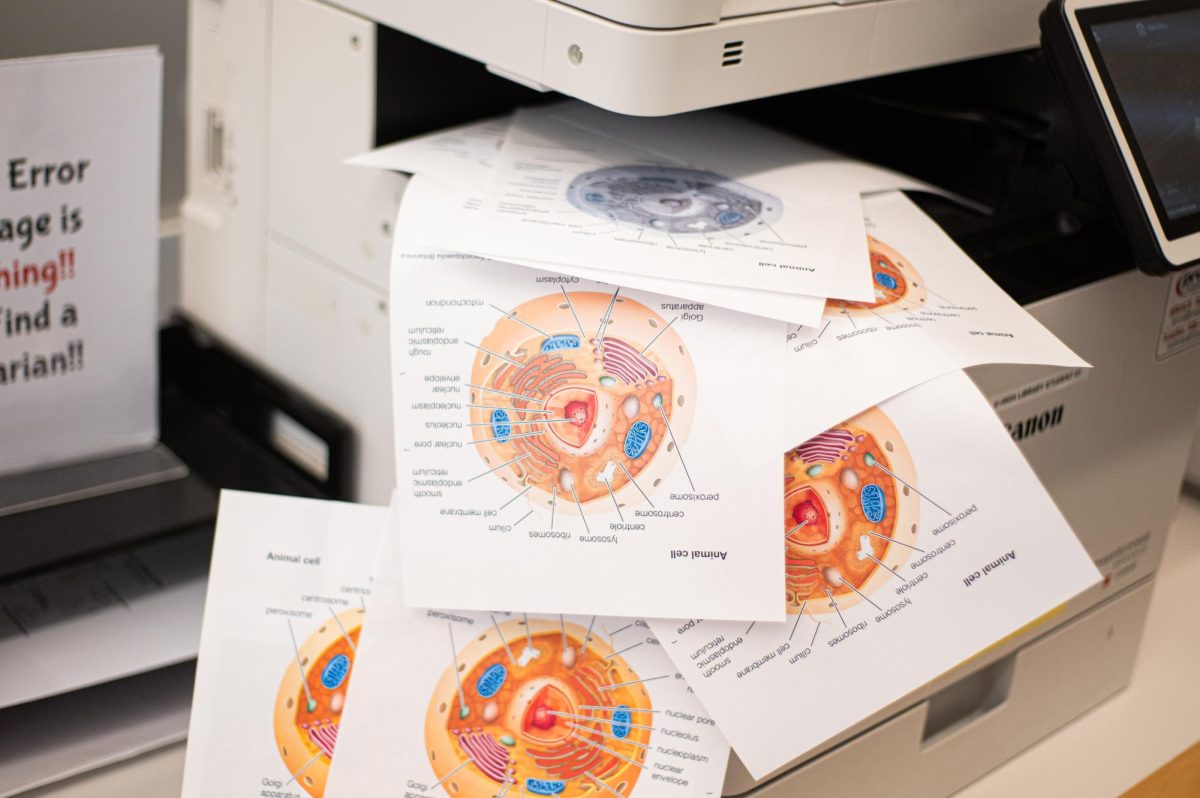
Everybody likes nice, colorfully printed notes, class readings and club flyers. What few consider is that the colorful ink for these printouts costs Lab $250,000 a year. Now, Lab’s administration is aiming to reduce this budget by changing the default printing options from colored to black and white, according to an email sent to employees on Nov. 11.
Brian Hewlett, director of information, registrar and compliance services, is asking everyone who prints to be mindful when they’re printing or copying.
“If it’s something that requires color, that’s an option; if it doesn’t require color, then that helps save Lab money and reduces the overall amount of supplies that we use,” Mr. Hewlett said. “That’s really the main hope, to get people to be more mindful when they’re making that choice.”
The email shared that the 100 printers at the Historic Campus and Earl Shapiro Hall printed over 1 million pages last year. Mr. Hewlett stressed that employees make up the majority of the printing and copying jobs, with teachers preparing daily work for their classes.
However, while overseeing the U-High library printers used by many students, librarian Shirley Volk also noticed that club members often print large batches. Regardless, she was still surprised by the total cost of printing.
“When that $250,000 figure came up, it was really surprising,” Ms. Volk said.
Last year, the Information Services department examined what to do about the environmental and budgetary costs of Lab’s printing. They considered multiple solutions, such as quotas, budgets and or restricting colored printing options.
“It seemed like the most sensible one was just to inform people, which was what the message was meant to do,” Mr. Hewlett said. “Ask them to be mindful, and then we put in place a default that makes it easy for people to make that choice.”
The email gave multiple points of advice to reduce the impact of colored printing. This included advising that any job over 500 pages should go to a professional printer and, when possible, to use digital documents instead of printouts.
“We want, as a school, to provide you the environment and the resources you need to be successful. There’ll be other times where it’s an essay or a set of math problems where you just need another copy you can mark up and make the choice to benefit your learning,” Mr. Hewlett said, “but also keep in mind that everything has a cost to it, and with this, the more money you spend in one place, the less money there is for something else.”
