


















The report of the Committee to Review the Laboratory Schools was released to parents and faculty on Nov. 20 with two main areas of focus on improvement: the Lab-University of Chicago alignment and Lab’s internal challenges. In both areas, the report explains that, like the University, Lab should be a place where teachers teach students how to think, not what to think. The report is available to read on the UChicago Office of the Provost website.
Messages from Paul Alivisatos, University of Chicago president, and Ethan Bueno de Mesquita, review committee chair and now interim director of the Laboratory Schools, stressed that this report will inform community-wide discussion and be used to strengthen Lab in the coming years.
The report states that the data were collected over six months through over 300 meetings with Lab parents, faculty, alumni, administrators, and university faculty. The committee also examined hundreds of emails and thousands of survey responses.
UChicago wants Lab to have greater alignment with its mission, culture and values
While Lab was more closely aligned with the university for most of the 20th century, over time, ties grew weaker, Lab gained more autonomy and priorities began to differ, the report said.
According to the report, Lab’s reputation of having an academically rigorous culture, supposedly synonymous with the university’s, has been challenged by some families and teachers.
“They described this as a drift away from the University’s scholarly culture and toward a model in which social-emotional and diversity priorities compete with, rather than complement, academic rigor,” the report reads.
Jimmy Yu, a junior, said he’s heard this sentiment from families at school events he has participated in, but does not believe that social-emotional learning and diversity have to be mutually exclusive with academic rigor.
“I just never really understood what the argument was when people were thinking that,” Jimmy said.
The report emphasized the need for Lab to share the university’s value: not just rigorous inquiry but open inquiry.
The report states, “Stakeholders described instances where classroom discussions, materials, or schoolwide messaging presented one perspective as settled or normative, overemphasized certain categories or narratives, or blurred the line between education and advocacy.”
The report says some families feel Lab is a place where students are sometimes being told what to think instead of how to think.
Anup Malani, a Lab parent and professor at the university, shares this opinion along with many other parents. He feels appreciation for the reevaluation of the student experience at Lab and the use of the university’s guiding principles from the Kalven Report.
“Kids are developing, and they need to think about things in a more open way so that they can come to a conclusion about their own value system and identity,” Dr. Malani said.
Junior Hailey Purcell said Lab, especially in early childhood grades, pushed her to have her own perspective.
“You’re still taught at a very young age how to think critically and how to think for yourself,” Hailey said. “And the best way to help yourself make your own opinion is to educate yourself, and I think something that Lab did very well is teach you how to form your own opinion.”
Internal challenges: teacher autonomy, curricular consistency and university resources
The report found that teachers value their pedagogical independence and that administrators have typically taken a hands-off approach when it comes to governing what teachers teach within their classrooms. The report states, “Over time, this has produced a culture of strong teacher autonomy but weak expectations and accountability.”
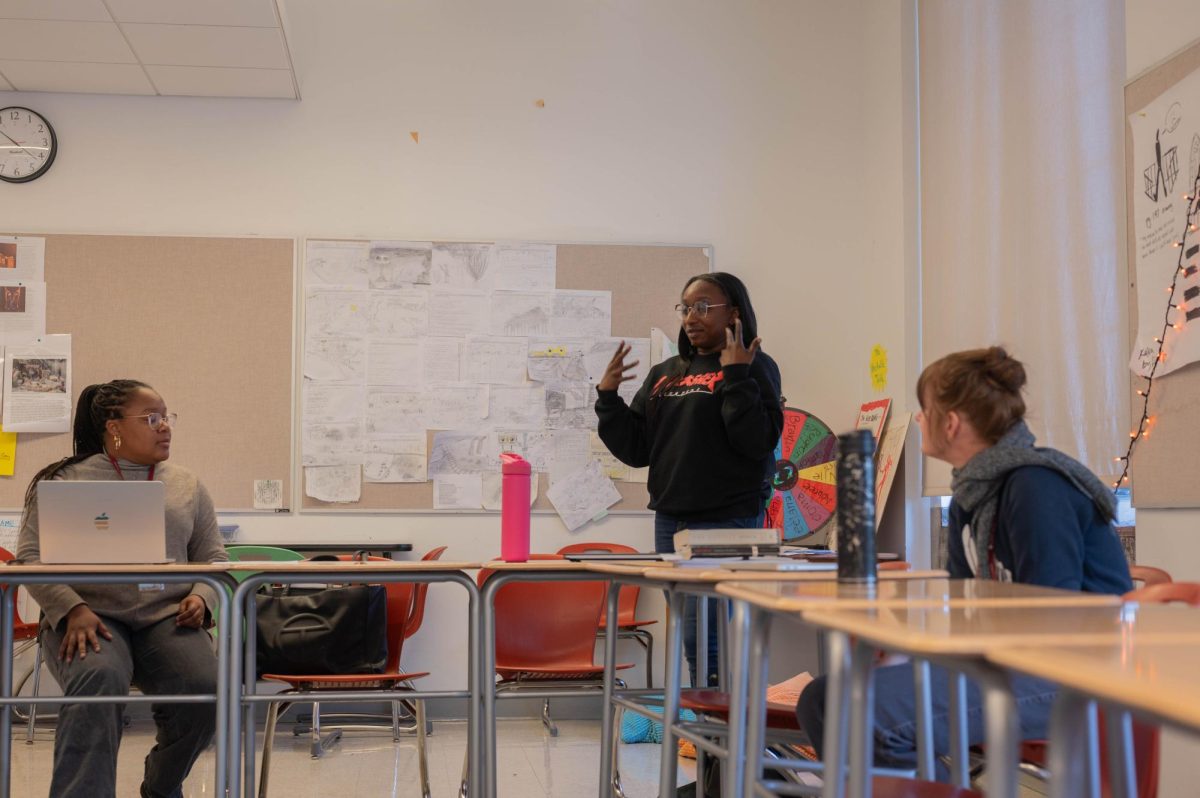
Teacher autonomy was one of the issues that came up during a Dec. 3 meeting with Dr. Bueno de Mesquita and Lab faculty, where he reviewed the report and answered questions.
Kenny Fournillier, a science teacher and co-chair of the high school faculty steering committee, appreciated the transparency of the meeting and hopes to gain a better understanding of how the majority of other teachers are feeling by the next faculty meeting.
“We’ll need to have tough discussions, and we’ll need to hash things out, and it might be a case-by-case basis, and as that happens, then I think we’ll sort of figure it out,” Dr. Fournillier said.
Dr. Malani believes that the university’s standard of teachers’ academic freedom is appropriate.
“What you say in the classroom isn’t the only expression you have of academic freedom, and that’s understood at the university level, and it needs to be understood at the high school level,” he said.
Jimmy’s experience as a student has allowed him to appreciate one emphasis area in the review: ensuring students’ curricular experiences are uniform.
“Sometimes it’s the same class, it’s the same course, but one teacher teaches it where they’re like weeks ahead,” Jimmy said, “and I think that can be a little bit more standardized, just so the experience across students is a little bit more consistent.”
Jimmy, Hailey, Dr. Malani and Dr. Fournillier view the efforts to give high school students more access to the university’s unique resources as a positive thing.
Jimmy said, “No other high school is connected to the University of Chicago like we are.”

Mark Moseley • Dec 9, 2025 at 11:16 am
Harmonious diversity please