



















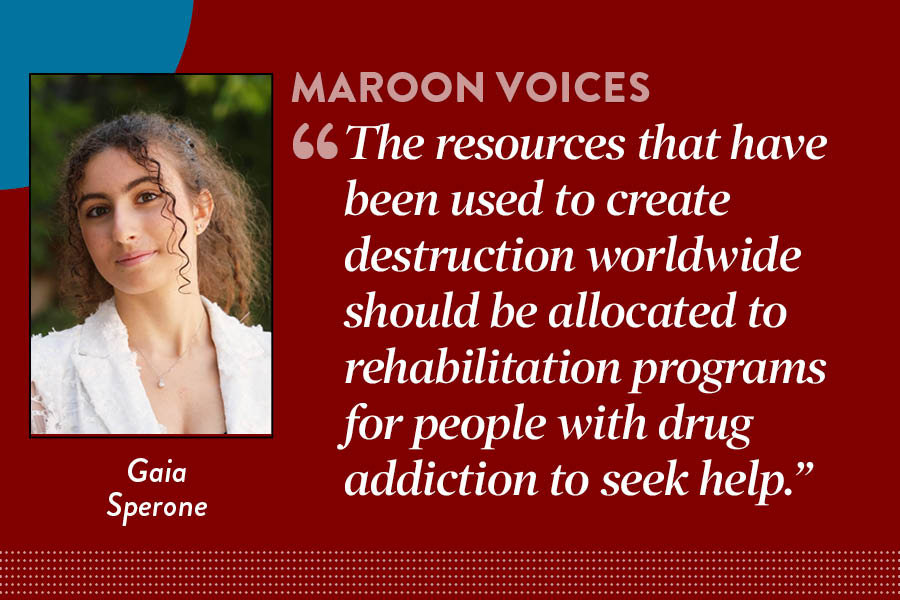
The Midway is committed to representing a wide range of perspectives and viewpoints, including from students not on the Midway staff. Our Maroon Voices series will feature guest columnists on a wide range of issues.
On Jan. 3, the Trump administration launched a military operation that resulted in the capture of Venezuelan leader Nicolás Maduro. Yet when Secretary of State Marco Rubio was asked whether the United States was at war with Venezuela, he denied it, stating on NBC’s “Meet the Press” on Jan. 4, “We are at war against drug trafficking organizations, not a war against Venezuela,” which framed the intervention as a part of what is generally known as the United States’ war on drugs.
The United States has spent over $1 trillion since launching the war on drugs in 1971, placing it under scrutiny for misallocating funds. Despite tighter penalties for using and selling narcotics, attempts to prevent the cultivation of plants used as the raw material for drugs, and plans for stemming their transportation and importation, the prevalence of drugs in American life has not decreased, according to an article by the nonprofit Harm Reduction International.
Instead of controlling supply without targeting demand, the United States should adopt a more balanced approach, addressing the patterns of addiction that drive drug purchases.
The war on drugs has been used to justify tremendous suffering around the world. The United States has given millions of dollars to the Philippines to combat the drug epidemic. However, according to Amnesty International, the government used these funds to kill thousands of people for suspected use or selling of drugs. Meanwhile, anti-drug aid to Colombia was for decades used to fund the fumigation of coca and poppy crops with the poisonous chemical glyphosate, leading to long-term health effects for people living in targeted regions.
Furthermore, U.S. anti-drug laws have historically targeted marginalized groups, such as Chinese, Mexican and Black communities, as is documented in an article in the Daily Journal, a California legal journal. Over time, policies derived from these laws have contributed to stereotypes and continue to influence arrests and legal cases today.
We cannot simply address the issue by incarcerating anyone found using, selling and buying drugs. Nearly 1 million arrests are made each year for drug law violations. However, according to the Bureau of Justice Statistics, fatal drug overdose in prisons rose by 600% in the time period between 2001 and 2018, yet according to the National Center for Drug Abuse Statistics 47.7 million people identified as users of illegal drugs as of 2023. The war on drugs has cost more money than people it has helped, emphasizing the need for change.
The United States should focus more on prevention. The resources that have been used to create destruction worldwide should be allocated to rehabilitation programs for people with drug addiction to seek help. Additionally, these funds can be used to create opportunities for people who would otherwise turn to the drug trade as a source of income. In doing so, we have a chance to dampen the market for illegal drugs, taking a step toward shutting down the industry completely and easing suffering for those affected by this issue.
