


















Natural sound of printer beeping
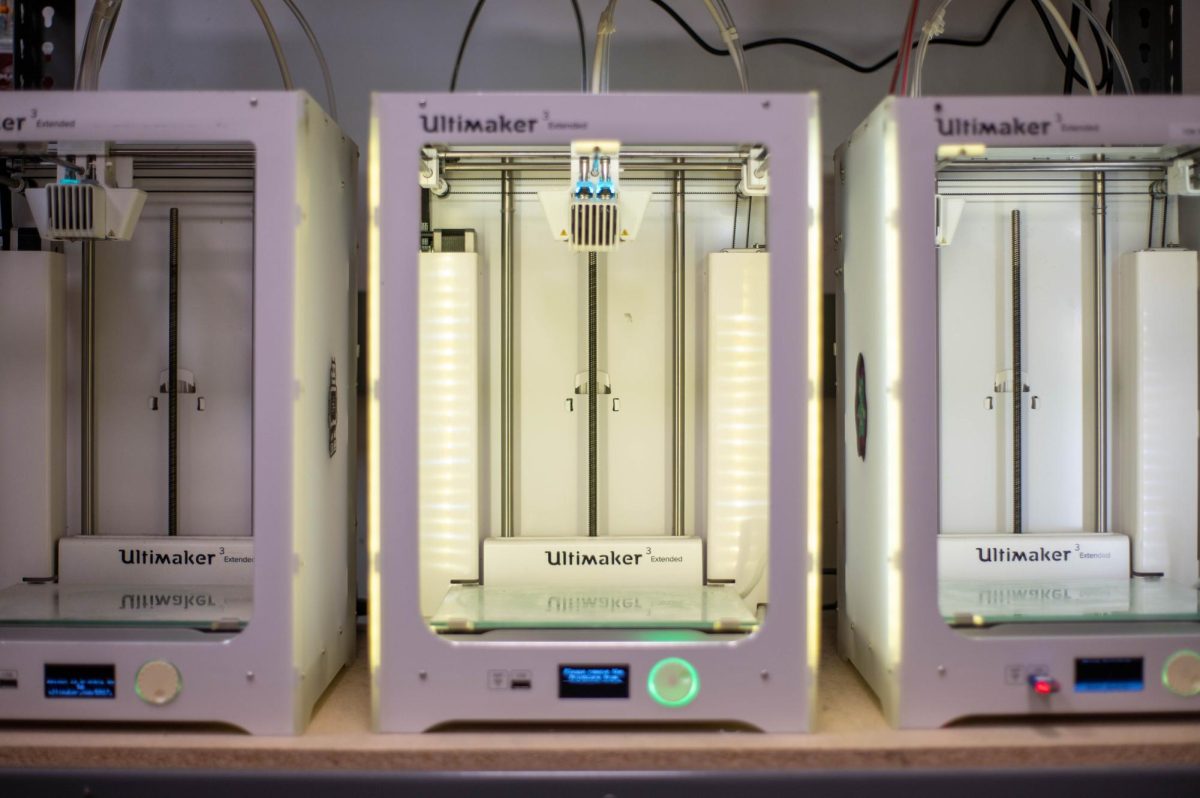
VO: In the corner of the Maker’s Space, a 3D printer hums nonstop, layer by layer, turning a digital idea into a real robot part. Just a few years ago, most FIRST Tech Challenge robots were built almost entirely from metal kits and pre-made pieces. Now, more teams are designing and printing their own custom parts, changing how robots are built.
VO: 3D printing is reshaping FTC robotics. Instead of being limited to aluminum plates and standard brackets, teams can now design parts that match their exact ideas and test them almost immediately. What once required weeks of redesigning and machining can now happen in a matter of days.
Natural sound comes in of metal clinking and screwing
VO: Darren Fuller is the head coach of the team. He said that 3D printing has increased in the last three years.
Darren Fuller: “When we first started 2018, didn’t even know 3D printing existed. It wasn’t a thing that was out there.”
VO: Little did they know, the team would have its own 3D printers in the next couple of years, and the technology would begin to change everything about how they design and build robots.
Mr. Fuller: “Probably by around 2020, maybe 2021, we first started doing some really basic parts in 3D printing, but it was, we were limited to like what we had access to and the type of materials to print in were pretty basic.”
VO: Before 3D printing, creating a single custom part could take weeks. If a design failed, the students had to start from scratch. Now, they can move through several iterations in the same week.
Mr. Fuller: “I mean, it really, it’s in a lot of ways revolutionized things because you’re able to design something, print it quickly as a prototype, implement it onto the robot test it, see how it works, figure out what needs to be changed, come up with a new iteration, print it.”
Natural sound of scoring and robots moving
VO: This speed allows students to experiment more and develop more ambitious designs such as creating a robot almost completely out of the 3-D printed things, and testing and refining multiple versions in a short period of time.
Mr. Fuller: “And especially with the printers that we use, they are so fast and capable now that you can get a pretty big print done in a day, whereas if we were using wood or aluminum or some other material, it might take a week to basically construct that same part for iteration one.”
Natural sound of robots driving
VO: Faster prototyping leads to stronger designs and better performance. For these FTC teams, 3D printing has become an essential part of turning creativity into competition-ready machines.
Natural sound of metal clinking from robots
VO: In this Maker’s Space, innovation does not wait weeks. It prints overnight.
Natural sound of a soft beep of the printer finishing
VO: From the U-High Midway, I’m Audrey Yin.
