

















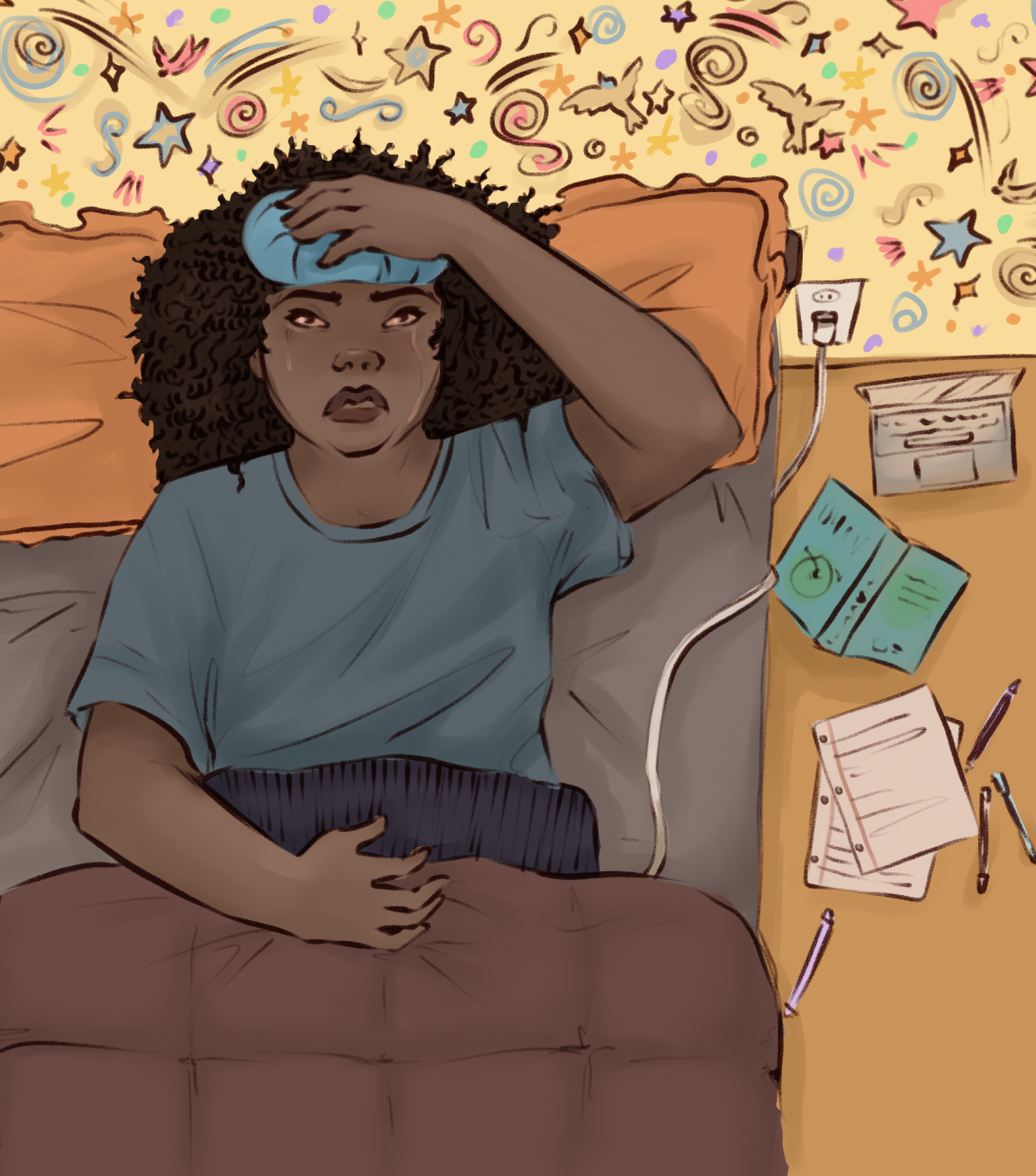
Rebecca Rupp was 14 when she first experienced menstrual pain that was severe enough to induce vomiting. Although this occurred years after she had her first period, shifting hormones altered her symptoms. For Rebecca, now a junior, the nature of the pain was particularly disarming.
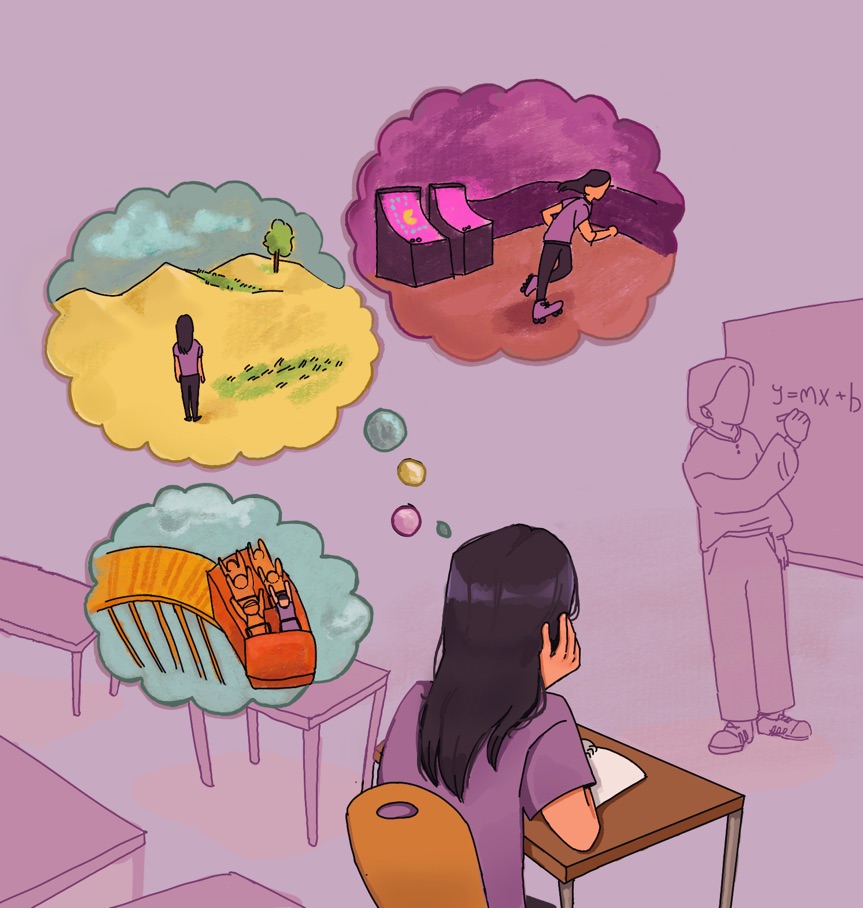
“I was actually at school in freshman year, and I was so confused about what was happening,” she said. “I was in so much pain, and I was, like, running around the school trying to find the nurse.”
Now, Rebecca endures these cramps three to four times a year, and while she knows what to expect, she rarely knows when the pain will strike.
Rebecca’s experience is more common than students may expect. Many young women and people with periods experience debilitating pain that interferes with daily activities.
U-High nurse Mary Toledo said she encounters high schoolers seeking assistance with managing menstrual pain multiple times a day, although the severity of students’ symptoms ranges.
When Rebecca experiences severe cramps, it’s rare for her to miss a day of school, but she often feels less motivated to attend basketball practice or do her homework.
Ms. Toledo believes that menstrual pain, combined with other symptoms such as nausea, headaches and fatigue, can leave students unable to concentrate in class.
Julia Chor, an associate professor in the department of obstetrics and gynecology at the University of Chicago, said that the moment menstrual pain interferes with day-to-day life, it’s appropriate to seek medical help.
Dr. Chor specializes in complex family planning and describes severe menstrual pain as a common complaint among patients. One of her first recommendations is an “around the clock” approach to pain medication.
“The best way to use it is actually starting the day before your period and the first two days of the period, and doing what’s called ‘around the clock,’” she said, “so not waiting for cramping to start.”
Aside from ibuprofen, Dr. Chor almost always suggests birth control. That may look like oral contraceptive pills, a contraceptive implant placed under the skin of a patient’s upper arm or a contraceptive intrauterine device, also known as an IUD.
“In general, the most effective method of helping with menstrual cramping is going to be a method of hormonal contraception,” she said.
“
In the last few years, however, Dr. Chor has had patients approach birth control with increasing skepticism. She attributes this shift to false or misleading information shared on social media.
“There is definitely good information out there,” she said, “but mixed in with the good there’s also some stuff that’s just not going to be accurate, unfortunately. That’s really hard.”
Rebecca is hesitant to meet with a gynecologist or begin hormonal birth control which, she admits, is partially a product of stories from social media.
“The hormonal imbalance that birth control can cause is something that I’m worried about,” Rebecca said. “I’m just worried that I’m going to turn into a really angry person who gets upset by minor things.”
Regardless of their interest in using birth control, Dr. Chor encourages everyone to ask for help, from a gynecologist or another trusted adult.
She said, “Seek help. Don’t suffer. Don’t suffer on your own.”