





















The art historian Ernst Gombrich said that there is no art, only artists. Rather, maybe there are no true artists, only art. It could be what unifies us. Humans make art, but art makes us human. One could argue that creativity has defined humans’ exceptionality. From faint depictions of bison on the walls of caves to early forms of sculpting, icon painting and eventually Modernism, creative works have often reflected civilization.
It is often overlooked that art history is history. It reflects the human experiences that have taken place before us. In other words, art is often made in reflection or in causation of society, and it is visual documentation that can take millions of forms.
Dadaism is an example of art as a reaction to societal norms. Dadaism, or Dada, was known as the “anti-art, anti-war” movement, and Dadaists were disgusted by the senseless, violence, and bloodshed of World War I. The movement itself rejected traditional forms of art, and it is known for the new mediums that emerged such as collage, the readymade and photomontage. Dadaism reveals that art can be more than artistic expression: rebellion and protest. Dada reflects and exposes the perceptions of the world that artists had in early 1900s Zurich, giving us a fuller understanding of what predates us.
Additionally, looking at early 20th century abstract art, we become conscious of how we could have easily made any artwork by Jackson Pollock as little kids. Abstraction is constantly reduced, although it’s the most familiar, earliest art we’ve ever made. Before abstraction, the world saw Impressionism. It was criticized for its seemingly unfinished style. Today, we recognize its impact: it challenged the standards that determined what was “valuable” art. The Impressionists rebelled from the rules that defined traditional art, and abstraction further pushed the limits of society’s view of art. Change reveals the potential art has to shift the status quo and redefine “sloppy” as revolutionary.
Yinka Shonibare’s “The Swing (After Fragonard)” is a 3D mixed-media installation that consists of a headless and African-print-clad mannequin. Shonibare reimagines Jean-Honoré Fragonard’s Rococo painting “The Swing,” critiquing imperialism, class and leisure, and emphasizing the brutality of colonial history. While giving a definitive nod to Rococo, the artist is asking us to consider the intersection of wealth, power and what leisure could really mean. Without the rise of the 1730s art history movement Rococo, this contemporary piece never would have existed. Comparing them gives us a glimpse into the state of the world in the 18th century as well as the 21st century, ultimately enhancing our understanding of what came before us, and opening doors for new forms of expression.
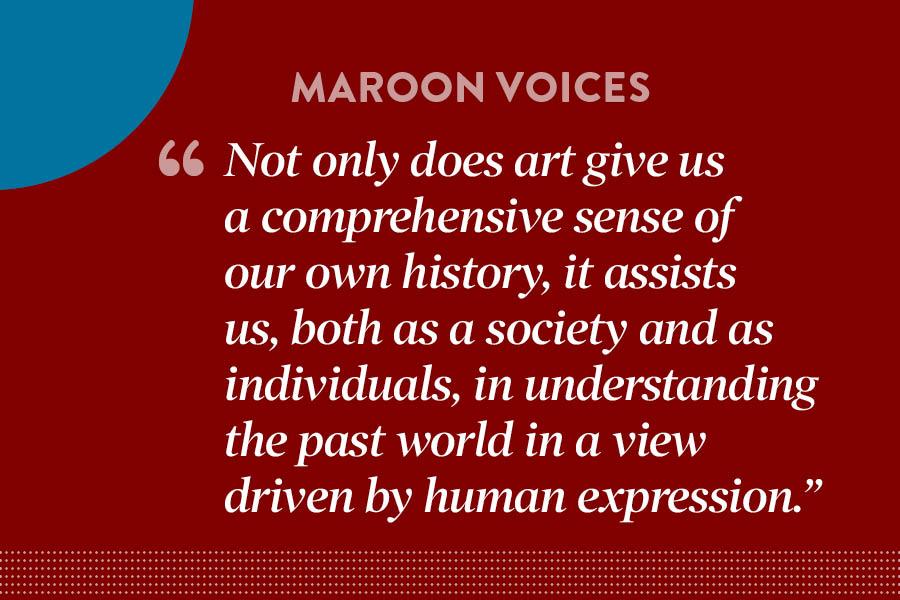
Not only does art give us an expressive, unique sense of our own history, but it assists us, both as a society and as individuals, as we attempt to understand the past world.

Gina Alicea • Apr 24, 2026 at 3:19 pm
I love this article!! I agree wholeheartedly! Thank you for writing about the importance of art!