















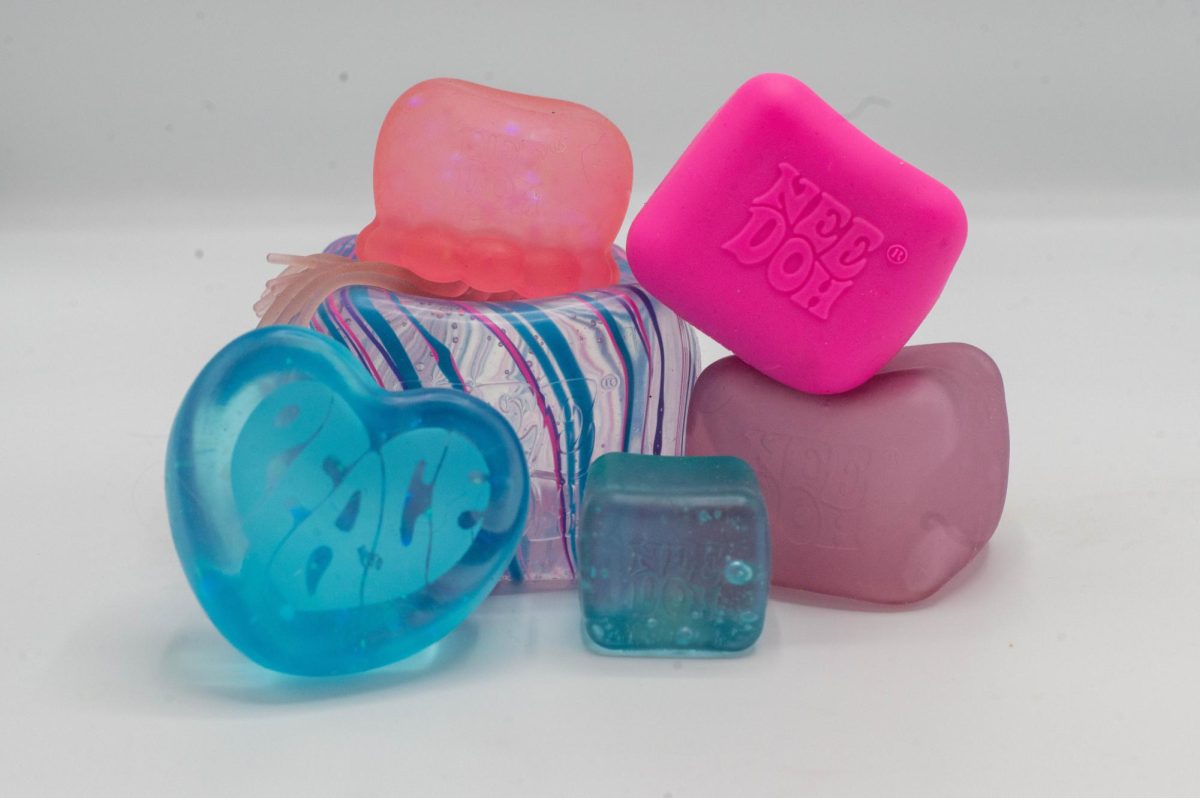
As senior Audrey Tian settles into her physics class, she grabs a palm-sized squishy pink cube out of her backpack. She begins jotting down her notes with her left hand while the other kneads the soft, rubbery blob: her NeeDoh.
Audrey isn’t the only student who uses a toy like this in class. At their peak popularity this winter, Audrey would see multiple people in any one of her classes using them for fun and entertainment.
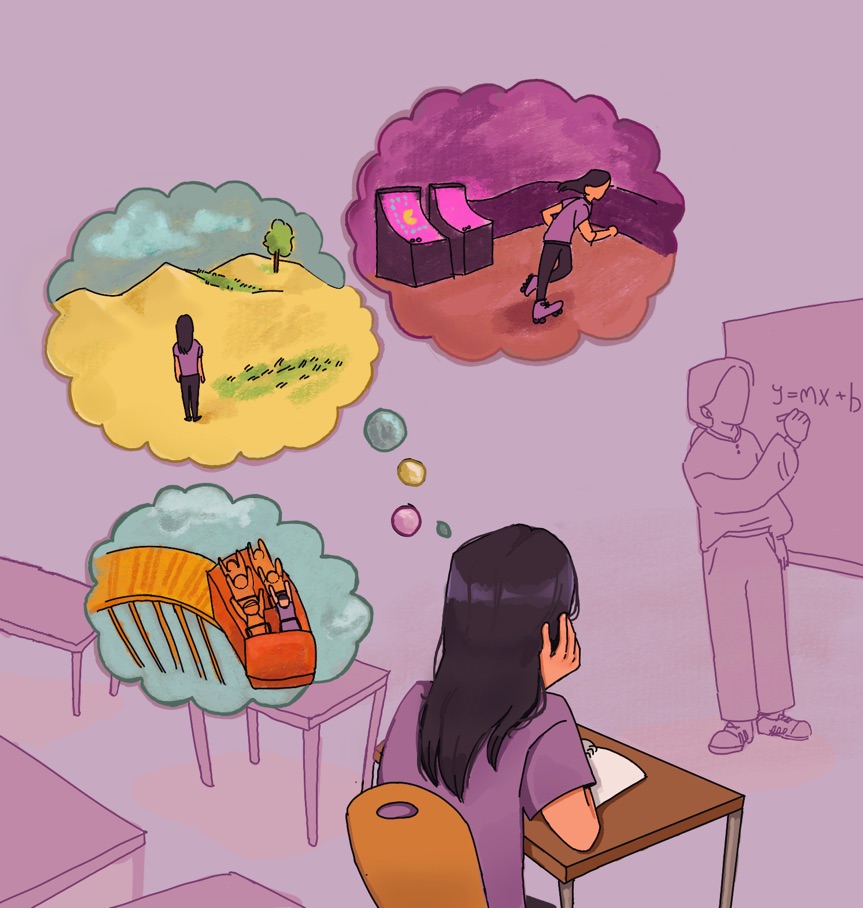
“I use them because they’re trendy and they’re fun to play with,” Audrey said. “I use them to make class less boring.”
What started as a viral TikTok trend of ASMR videos and large collections, NeeDoh toys have now squeezed their way into the hands of U-High students to become a staple fidget around campus.
Although introduced in 2017, NeeDohs went viral in 2026, appearing in 247,000 posts on Tik Tok. Paul Weingard, CEO of the company Schylling which makes NeeDohs, told The Atlantic that sales in the first three months of 2026 were more than three times higher than in 2025. Even U-High’s prom committee joined in on the trend and sold NeeDohs in February to raise money.
Audrey got her first NeeDoh two years ago as a sophomore, before the toy became an internet sensation.
“I saw it on TikTok, and it was just a blue ice cube, and it was medium-squishy level,” Audrey said. “It was clear, and it was really nice. You could see the air bubbles inside of it.”
Spanish teacher Patricia Zavala didn’t expect to become a fan of NeeDohs. Her first was originally a gift for her son, but after spending time cleaning it along with her son’s other toys, she found she enjoyed fidgeting with the toy.
“Then I realized that it started helping me to calm down,” Ms. Zavala said. “So eventually I just sneaked it into my bag, and now I just started carrying it in school.”
Today, Ms. Zavala uses a NeeDoh given to her by a student when she’s planning or presenting a lesson. While most teachers don’t allow toys or fidget items in their classrooms, Ms. Zavala recognizes their value despite the risks of distractions.
“I think it can go both ways,” Ms. Zavala said. “I think it could be a really good resource for those who need to fidget. They’re more quiet than clickers or other types of fidgets that make a lot of noise. But I also believe that in the wrong hands, it can just become a distraction for the students.
