





















On an early Saturday morning, a sea of amazed eyes watch as vibrant food coloring swirls on top of a surface of milk. This kaleidoscope of colors called Magic Milk demonstrates hydrophobic and hydrophilic properties and intrigues the crowd of young students, eager to try it out for themselves.
Women in STEM’s Science Saturdays thoughtfully introduces younger students to science through exciting and informational experiments.
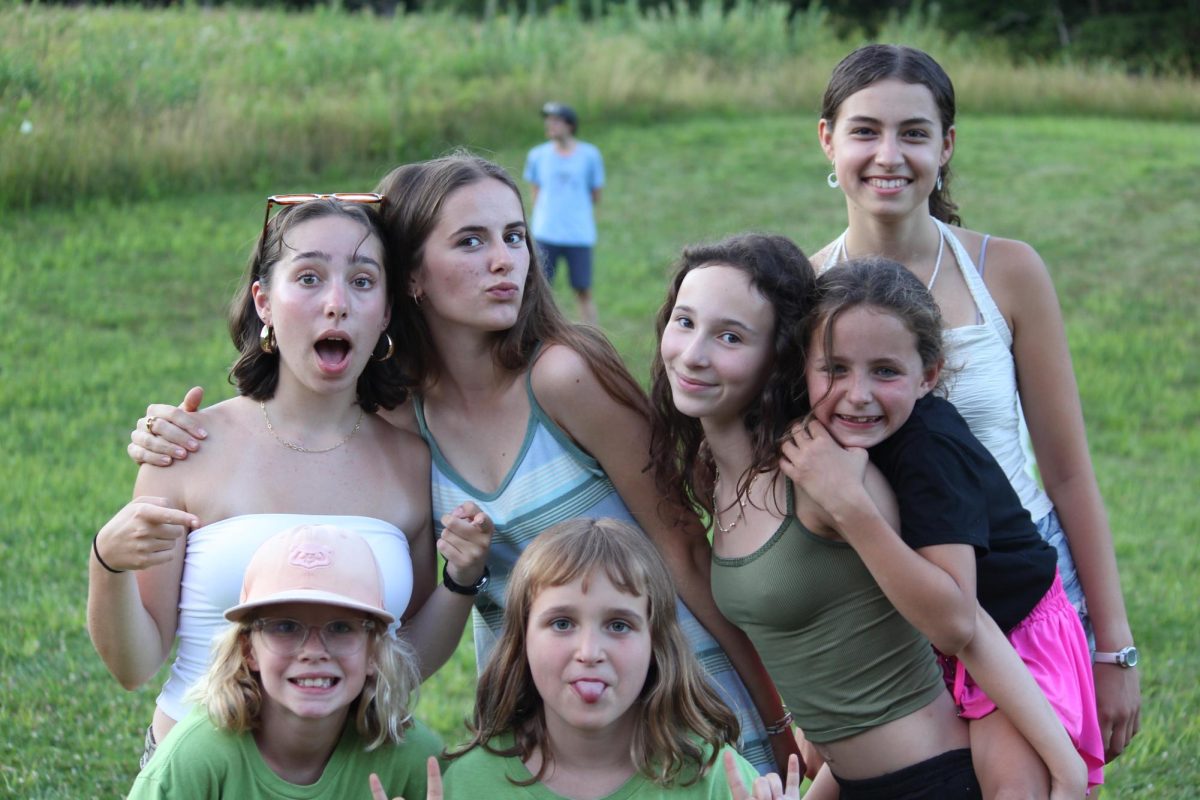
Since the club’s founding in 2018, Science Saturdays has been a tradition that allows members of Women in STEM to share and teach their love of science to younger students at Lab.
“There’s not a lot of opportunities at Lab to see older students interacting with younger students,” Elizabeth Hubin, Women in STEM adviser, said. “I think anytime a high school student is able to lead and explain an experiment to younger students, it’s a really magical thing to see.”
Science Saturdays are held in Dr. Hubin’s room two to three times a year and include four to five visual experiments followed by a slideshow presentation to explain the science behind those experiments.
Club co-president Sofia Picciola believes that Science Saturdays connects with John Dewey’s philosophy of kids learning through experience.
“I think that it’s really cool to see them watch science happen in front of their eyes that they created,” Sofia said.
In preparation for the event, club members work to plan the experiments, taking into account what will be both visually appealing and engaging for the kids.
Some examples of experiments done during Science Saturdays are the Marshmallow-toothpick experiment, which challenges students to build a strong structure made of just toothpicks and marshmallows and teaches the importance of triangles and teamwork, and oobleck, which teaches students about the properties of the states of matter.
Dr. Hubin said Science Saturdays allow the high school students to demonstrate their level of understanding by successfully presenting science in a way younger kids can digest easily.
She also believes these mentorship programs are helpful in introducing kids to science and encouraging them to be future leaders in their school.
“I think it does encourage them to become part of something like Women in STEM later on,” Dr. Hubin said. “It shows them that these clubs are really hands-on and fun. And I think that when someone experiences being mentored in this way, they’re more likely to want to become a mentor themselves.”
