


















The first time Lilah Orlov received her grade for a middle school math test, someone asked to see her score.
After the papers had been passed back, lying upside down on the desks with traces of red pen bleeding through the pages, a girl whispered to Lilah, “What did you get?”
Before she could answer, the girl put her hand on Lilah’s test, pulled it toward her across their shared desk and peeked at Lilah’s score in the upper right hand corner. Lilah looked up to see that most of the kids around her were repeating this ritual, swapping tests or whispering scores into their friends’ ears.
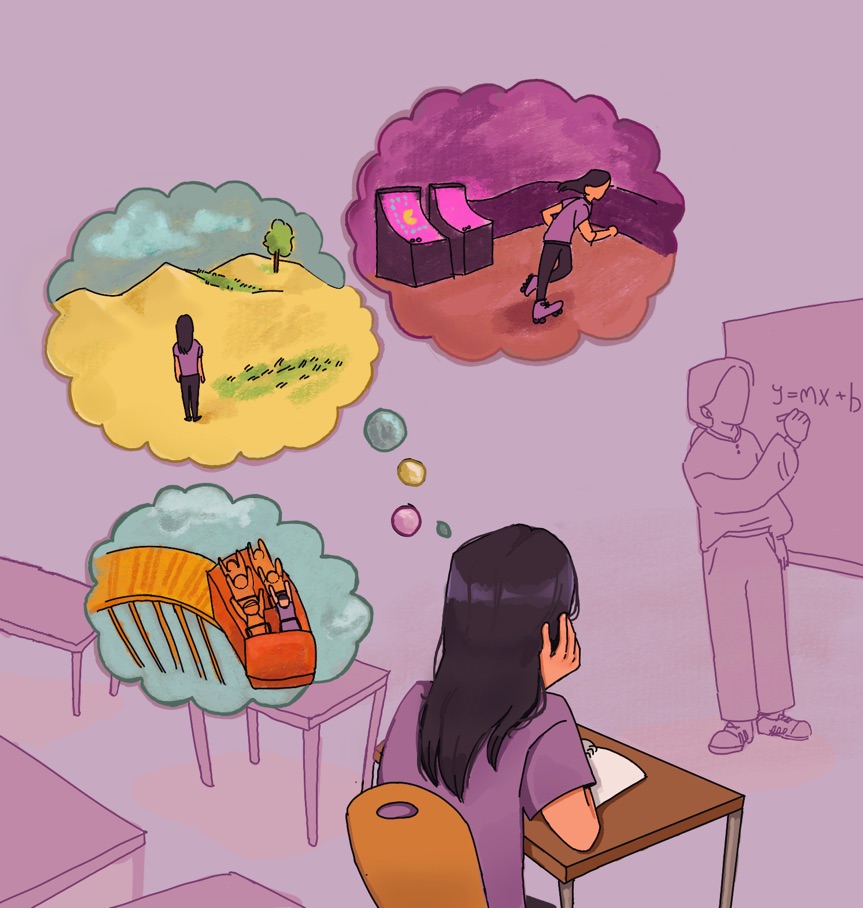
Since sixth grade, Lilah has struggled to identify whether her academic motivation is rooted in personal goals or the approval of her peers.
“My motivation has ultimately come from this place of all this peer pressure,” she said. “And I think that that’s not ideal, but it also benefited me in the end.”
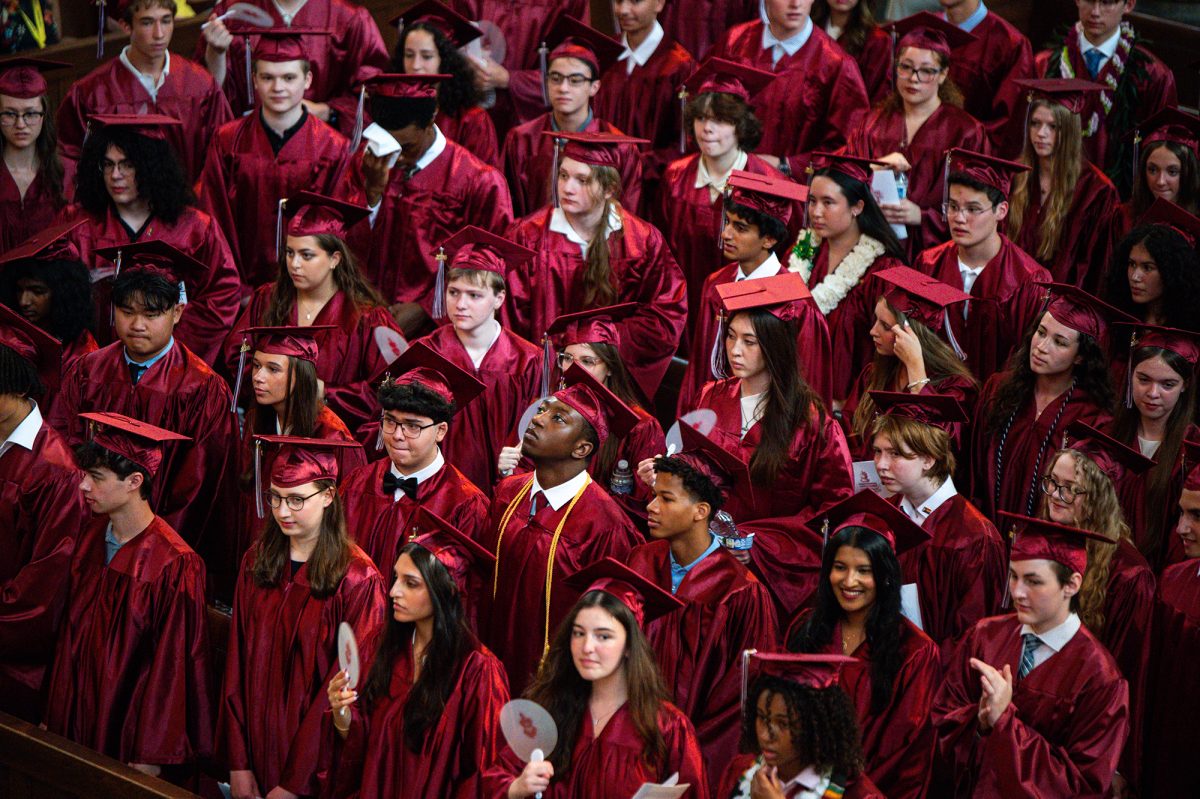
When students discuss U-High’s culture, they list grievance after grievance: late nights, unhealthy competition, college obsession. But in their endeavor to earn the moniker of “smart kid” — and the material success that title supposedly confers — it’s all worth it.
When ninth grader Simon Ellis started high school, he was surprised that his classmates were already thinking about college. They calculated potential GPAs based on the number of classes they were taking and strategized about which extracurriculars to do.
“I was talking to somebody in history class, and she was like, ‘Oh, yeah, I want to go to Yale. That’s why I’m doing MUN,’” he said, referring to U-High’s accomplished Model United Nations team.
Some of Simon’s friends who don’t have Instagram ask to borrow his phone, not to watch Reels, but to look at uhighdecisions25 — an Instagram account where seniors posted their college decisions.
He said, “There’s a lot of pressure on college, which seems crazy to say as a freshman.”
Senior Isolde LaCroix-Birdthistle has felt a certain amount of pressure concerning the college process for most of her time at the Laboratory Schools, including middle and lower school.
“College has always been a thing,” she said. “It’s like a looming cloud that’s always been there.”
Isolde struggled as the students around her compared grades and flaunted their activities. Every conversation seemed to lead back to college. However, she is ultimately grateful for the intensity of U-High’s environment.
“For schooling, being surrounded by such smart people, kids and teachers, has pushed me to be a better student,” Isolde said.
Lilah also feels the pressure has been constructive. Even as she wishes her academic motivations were separate from her peers, Lilah believes she would not be as dedicated without the influence of her classmates and U-High’s culture as a whole.
“I think that it’s not ideal, but it also benefited me in the end, because I work a lot harder than I would have if I was at a school where academics weren’t as highly valued,” she said.
Simon thinks it would be less stressful if students kept their grades and their extracurriculars to themselves. But he also can’t imagine what that would look like, or whether students would still succeed.
“I definitely think it pushes people to be the best,” he said. “Maybe pushes them to the limit almost or pushes them close. That can be good.”
