








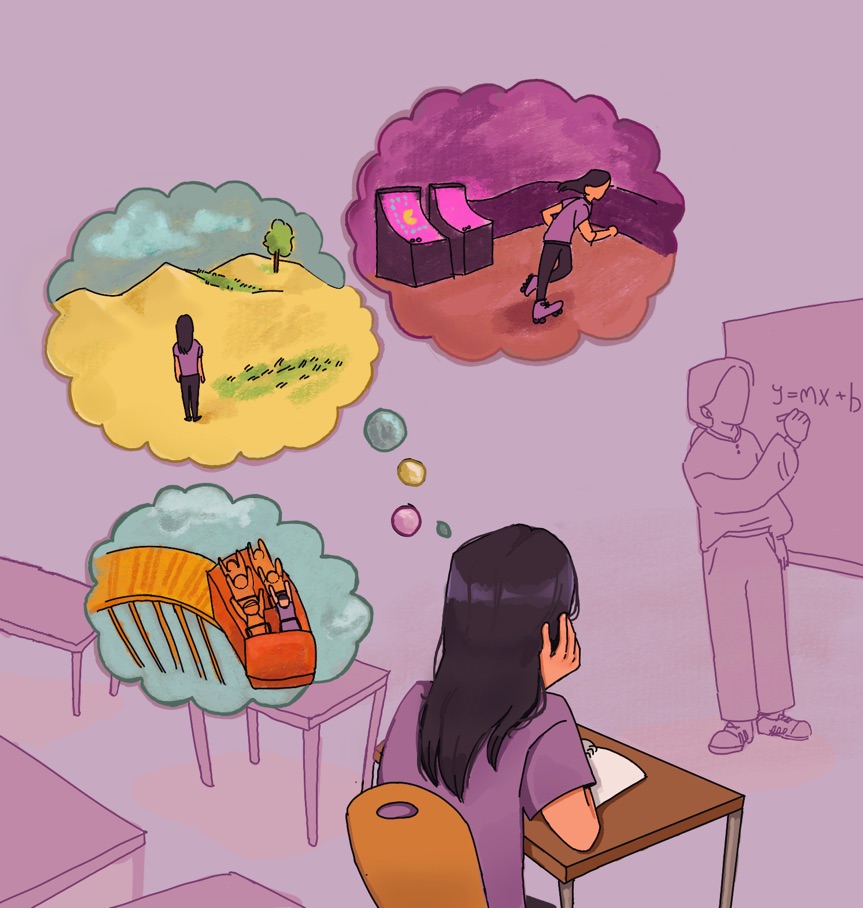










While high school may equip students with foundational skills such as how to plan homework and analyze a text, success in college and eventually in the professional world requires attaining and developing new skills essential to a career — but these skills aren’t always taught at school.
Budgeting
Learning how to save money is one of the most essential things a college student can learn, as having a grasp on finances early is essential in setting up for future success. Senior Julia Bender wants to see more financial education at Lab.
“I think there’s an opportunity for Lab to do some budgeting curriculum and some tax curriculum, at least within advisory or during an assembly,” Julia said. “Though we learn a lot of stuff, we don’t talk a lot about personal finance, which is extremely important.”
Julia believes that budgeting is something that can easily be taught in U-High whether through short seminars for juniors and seniors, incorporated into the period after college application deadlines or through discussions with parents and other family members.
Some universities, such as MIT, have established resources for students to learn how to budget, such as budgeting worksheets, which are available for use by the general public as well. Several banks, such as U.S. Bank, also have resources to teach budgeting.
Filing taxes
Even if a student doesn’t get a job in college, filing taxes will become an essential skill once they graduate and are employed, as most U.S. citizens and permanent residents are required to file a tax return on income above $14,600 and to pay tax on income above $15,750.
This process has many variables and can quickly become confusing for people with no prior knowledge.
While many tax-filing companies exist, these services can also incur inconvenient costs, reaching up to the hundreds, and even thousands of dollars for the most complicated filings, for example, a business.
Many people learn to file taxes from older family members. Senior Evelyn Halbach said her mother always included her when she was filing taxes.
“I actually have a unique scenario, I used to be a professional actor, and I had a lot of money from that,” Evelyn said. “So my mom started my Roth IRA when I was, like, 5, and kind of like along the way, clued me into all of these things. I have my own business now that I file taxes on as well.”
For students learning to file taxes alone, the Internal Revenue Service’s website contains helpful step-by-step guidelines and instructions.
Building relationships
Knowing how to make connections with people is an essential part of life beyond high school. The ability to reach out and to make a good impression on people can help with many aspects of preprofessional and professional life, such as internships, jobs and other opportunities.
Evelyn believes U-High has a good start in teaching these skills through the summer programs, such as Summer Link.
Hannah Gao, a junior, also emphasized the importance of finding an adult mentor, and that having this kind of relationship with someone can be beneficial for social and personal reasons, not only professional.
“I think it’s really helpful, building a support system, having a close counselor or something,” Hannah said, “just building relationships with older people.”
Students can gain and expand on these skills of establishing relationships by experimenting with different programs and internships, using the application process as a way to practice for more important opportunities in the future.
Health care planning
Unlike during childhood, a college student is responsible for their own health. If students have a medical emergency, such as illness or an injury, they will likely have to take care of it themselves, whether by picking up and refilling prescriptions or maybe even going to the hospital.
Establishing a plan would be something easy to reference or access, containing information such as the person’s insurance information, emergency contacts, as well as research on nearby hospitals. Students should also discuss preferences for transportation to a hospital with their parents, as ambulance prices can be expensive.
Hannah said people can get a sense of how a university takes care of its students by doing campus tours and prior research. She said that U-High could also contribute to this by establishing sessions where students can workshop safety plans.
“I think something like that would be pretty useful. Also, when you get into college, or like, college tours and orientation, that kind of stuff, they include that, too,” Hannah said. “I toured Wash U, when I was visiting my sister, and they, like, showed where the student health center was, and the police station on campus.”
Safety and living alone
Living alone is one of the most significant differences between high school and college. Even though most students live in residence halls with a roommate the first year, many move out afterward, preferring to either live alone or with friends. Those who choose to live alone are faced with new considerations, especially regarding safety.
Hannah said U-High does a good job of preparing students to start thinking about their safety, especially the resources available to them on a college campus. She said the LAB SAFE app, which is similar to the one used by the University of Chicago, is very good.
However, she also thinks many students would be interested in the opportunity of safety seminars, especially if they were incorporated into the college applications process.
“I think it’d be good to have almost like a workshop that seniors can go to after RA, regular apps, like, go to and just learn about life, campus safety, that would be really useful. Just life skills that you would need in college,” Hannah said.
