




















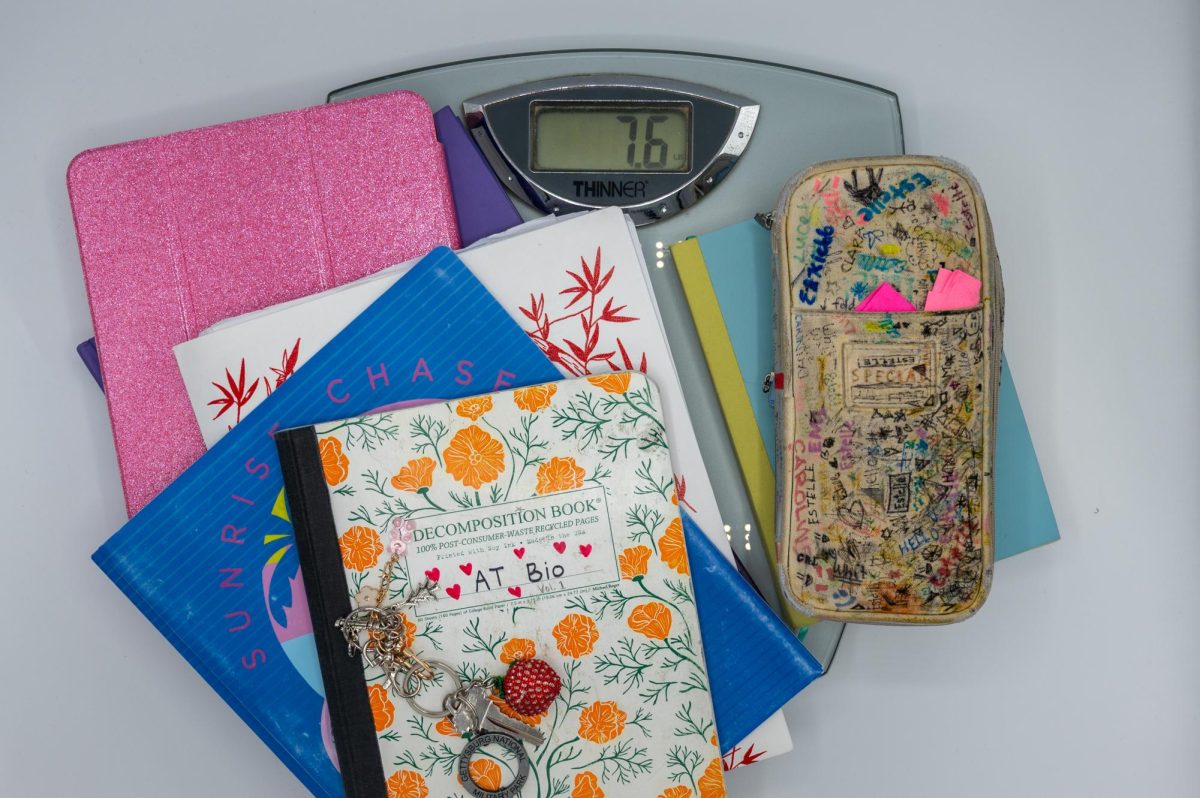
As junior Bella Fuller wakes up for school in the morning, she jams her folders, books and laptop into her bright purple backpack. As she quickly slings its thick straps over her shoulders, she shifts the weight of the backpack, noticing how heavy it has become.
For many students, this routine is ordinary, even forgettable. But it also can be unhealthy.
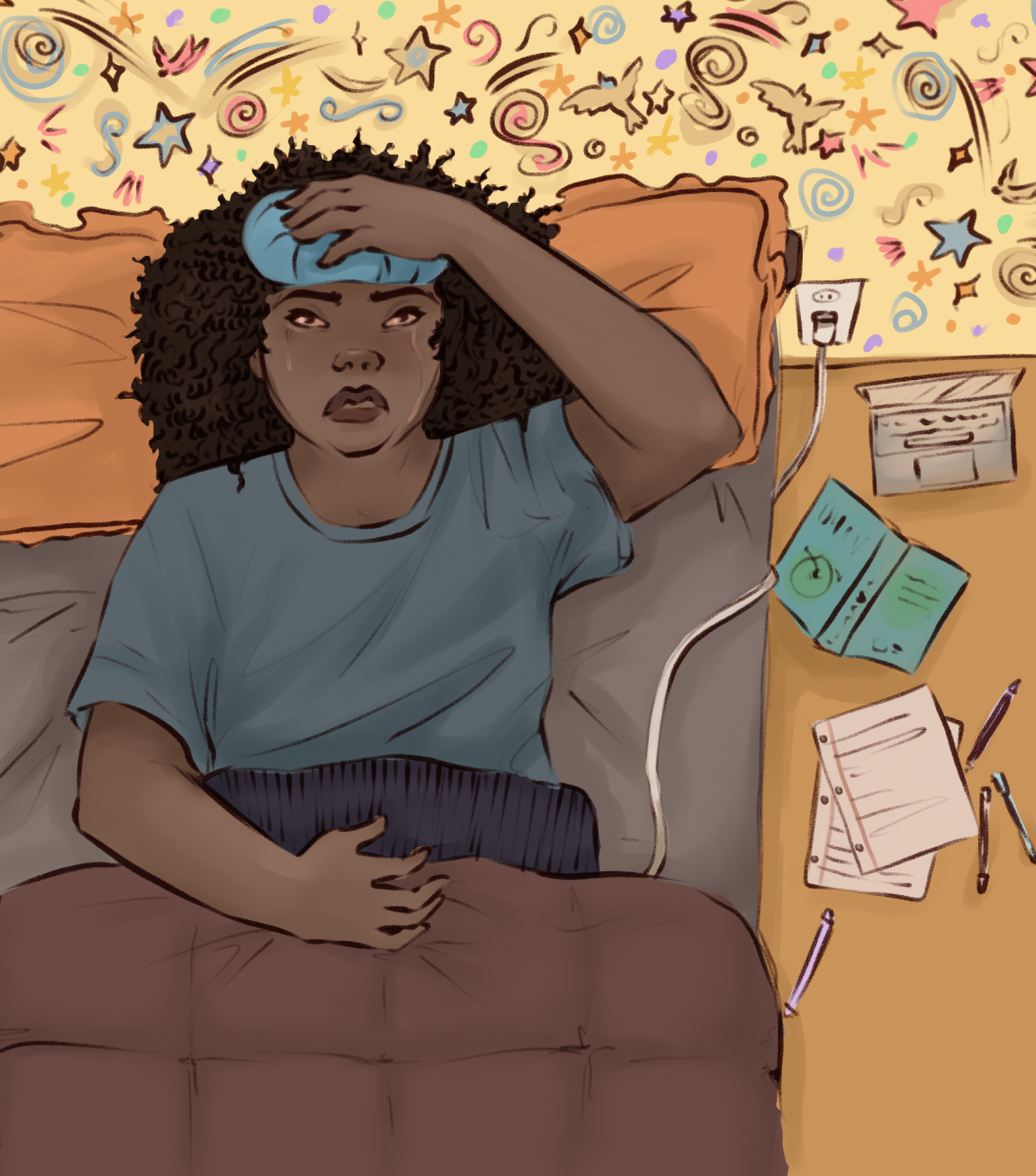
According to the Spine Health Foundation, carrying an overweight backpack can lead to nerve damage, long-term spinal problems, back pain and poor posture. Despite the preferred weight of backpacks being 10% of your body weight, studies show that many students carry backpacks weighing 15% of their body weight. Hidden within this 5% difference is the potential to dangerously compress parts of your back.
At U-High, wearing a heavy backpack is not simply common, it’s an unpleasant truth within the school culture that promotes carrying everything in a backpack instead of using a locker.
Dr. Greg Primus, a Chicago-based orthopedic surgeon, affirmed that backpacks have been linked to various health concerns.
“Over the last several decades, there’s been some definitive research that definitely linked wearing backpacks to back pain and spinal deformities and other conditions,” Dr. Primus warned.
Dr. Primus also explains that when it is necessary to wear a heavy backpack, it is important to use straps that can be tightened across the waist, as are common on hiking bags.
He also asserts that this is a pertinent issue for younger people carrying backpacks.
“You potentially have advanced the strain and wear of your back that may not have started to occur decades later,” Dr. Primus said.
Bella feels U-High students are pressured to carry everything within their backpacks as part of the culture. She said this anxiety began in middle school and has continued through high school.
“In middle school, I had teachers who would often shame people if they didn’t bring their materials to class, because, in middle school, y’know, you didn’t have backpacks, so you had to carry all your stuff from your locker,” Bella said. “So I kind of developed an anxiety around that.”
Senior Sophie Li has noticed that insufficient locker usage is a central reason why students feel the need to overstuff their backpacks.
“Our lockers are just kinda small, so we can’t actually fit [anything in them],” Sophie said, “and also people don’t want to go all the way to their locker to get their stuff.”
Bella agrees and believes that U-High students often ignore their lockers.
“I know a lot of people who don’t even know where their locker is,” Bella said.
After junior Saanika Dutta was diagnosed with a back condition, she had to limit the number of school supplies she carried. Saanika thinks that more students should reach out to resources and do the same.
“I met with Ms. Scott, the learning coordinator, and she and I went through all of my books, devices, folders that I bring to school,” Saanika said, “and she really helped me find out ways to cut down the physical stuff I have to bring.”
Both Saanika and Sophie noticed not every student uses their locker. They both have made efforts to use their own to try and decrease the weight on their backs.
Dr. Primus warns that not all back pain can be cleanly traced to backpacks.
“Back pain is very common,” Dr. Primus said, “and so it’s very difficult to absolutely blame certain backpacks.”
As school comes to a close, Bella struggles into her backpack once more to make the trip home, becoming one of the majority of students nationwide who wear a backpack, and also, unconsciously, one of many whose backpack might be contributing to nightly pains.