



















This February, The Washington Post removed its section called Book World. As one of the last stand-alone book sections, Book World’s demolition may feel like the death knell for literary criticism. Both teenagers and adults read fewer books. According to a New York Times article, many high school teachers struggle to assign full length novels to students with shortening attention spans. The novel is no longer in demand compared to other, particularly short, forms of content. However, the resonant capacity of literature persists. To emphasize this point, the U-High Midway asked five staff members to pick a book outside of Lab’s curriculum that resonated with them. Here are their selections:
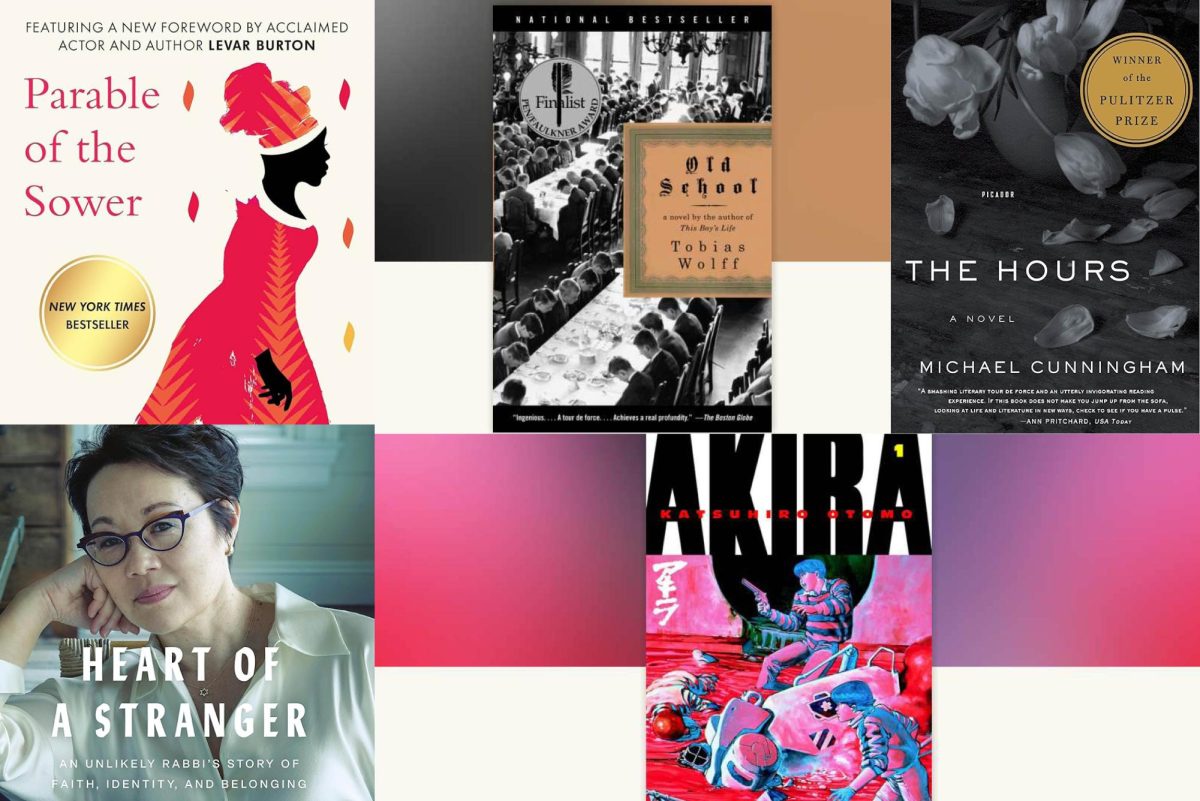
“The Hours” by Michael Cunningham
It’s 1923: a young Virginia Woolf is beginning to craft her revolutionary novel “Mrs. Dalloway.” It’s 1949 Los Angeles: Laura Brown, pregnant, restless and home alone caring for her son, tries to make sense of her life while reading Ms. Woolf’s novel. It’s 1999 New York: Clarissa Vaughan, a lesbian book editor, plans a party for her dying friend and former lover, Richard, an acclaimed writer living with AIDS.
In “The Hours,” Michael Cunningham crafts both an homage to Ms. Woolf’s “Mrs. Dalloway” and an independent exploration of legacy and survival. Across three intertwined narratives, these women are shaped by the reverberations of “Mrs. Dalloway” as they confront social expectations, familial conflict and their own mortality, all in the span of a single day. Mr. Cunningham triumphs through his ability to portray the anguish and the brutality in each woman’s life while also insisting on the possibility of grace, that there will be “An hour here or there when our lives seem, against all odds and expectations, to burst open and give us everything we’ve ever imagined.”
— Ari Novak
 “Akira” by Katsuhiro Ōtomo
Katsuhiro Ōtomo’s “Akira” presents the high-velocity storyline and intensely illustrated panels, which kickstarted the cyberpunk revolution of manga. Kaneda and Tetsuo, two teenage bikers from the meticulously drawn Neo-Tokyo, explore the ruins of the old city. After a crash caused by a paranormal encounter, Tetsuo finds himself gaining psychic powers. Without warning, he’s put at the mercy of drugs that help him quiet his powers and within the crosshairs of a secret military organization aiming to prevent the reemergence of a power: Akira.
The book balances spectacle — the psychic drug cartels, spectacular motorcycle chases — with the emotional core of Tetsuo’s relationship with Kaneda, who is distraught by his friend’s newly violent character and infiltrates the government to find out what happened. When they finally reunite, one is a revolutionary investigating the Akira Project, and the other is a madman with powers that can make him the next “Akira.”
— Abhay Chandran
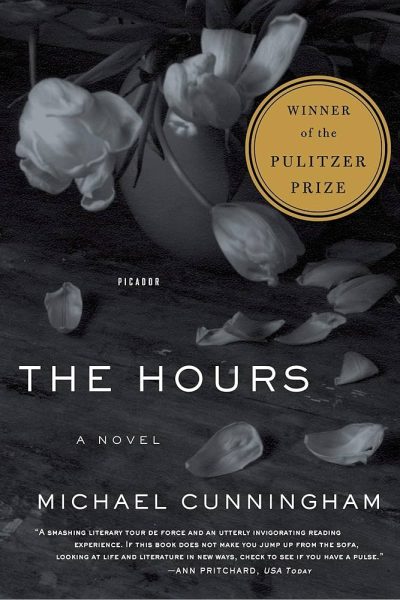
“Old School” by Tobias Wolff
Tobias Wolff’s 2003 novel “Old School” is not nonfiction, nor is it entirely fictional. The novel uses very real authors such as Ayn Rand, Robert Frost and Ernest Hemingway as fictionalized characters who visit the New England preparatory school where the unnamed narrator resides. His classmates are obsessed with literature, routinely competing in writing competitions for opportunities to engage in one-on-one discussions with these visiting authors — a tradition that eventually forces the spiraling narrator to reckon with his own moral and intellectual failings. For an enjoyer of “Dead Poet’s Society” or perhaps “The Secret History,” “Old School” offers many similar themes through an angle that blurs imagination and literary history.
— Light Dohrn
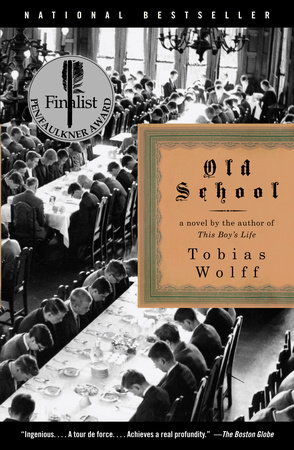
“Heart of a Stranger” by Angela Buchdahl
“I’m a stranger. But I’m also home,” writes Angela Buchdahl. Buchdahl is not your average rabbi. The daughter of a Jewish American father and a Korean Buddhist mother, her autobiography, “Heart of a Stranger,” tells the moving story of the first East Asian American to be ordained as a rabbi. Each chapter is thematic, comprising a personal reflection paired with a D’var Torah (sermon).
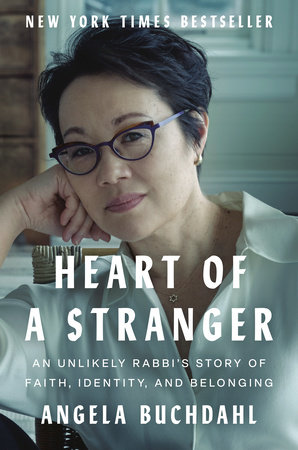
Although Ms. Buchdahl always knew she wanted to be a rabbi, she battles insecurity. At a summer program, a peer questions her Jewish identity, at Yale her research on women as Jewish prayer leaders leaves her feeling “marginalized and invisible.” She shares her experiences with deep humanity, including the harrowing account of negotiating with a gunman during the 2022 Colleyville synagogue hostage crisis. A gentler but striking episode comes when Ms. Buchdahl describes a mountain hike with her mother. Looking from the summit, Ms. Buchdahl thinks of the Shema, Judaism’s most iconic prayer. She writes, “If everything is one then we all belong to this mountain, this earth, and to each other.” Ultimately, Ms. Buchdahl reconceives her outsider status, embracing it as powerful and, indeed, beautiful.
— Orlie Weitzman
“Parable of the Sower” by Octavia Butler
The 1993 novel “Parable of the Sower” by Octavia Butler takes place in a dystopian society entrenched in poverty, drugs, rape, arson and murder, where the only thing left for 18-year-old Lauren to hope for is change.
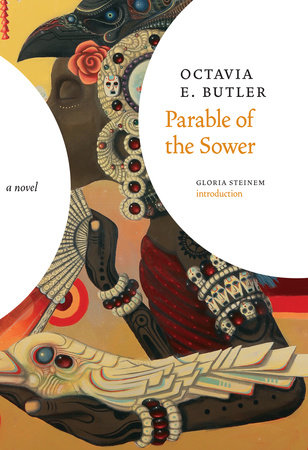
After the effects of climate change, 2027 California is no longer safe with families having to live in walled communities of concrete and dangerous razor wire. Even behind these walls, characters are at risk as bloodshed quickly begins to interfere in their lives. Families begin heading up north, hoping for a better life or simply the safety of indentured servitude.
In “Parable of the Sower” Ms. Butler poses the question of safe obedience versus perilous freedom. In spite of it all, Lauren finds hope in her self-made religion “Earthseed,” which promotes the belief that “God is change.” In her eyes the only way to finally reach peace is to survive long enough for change to inevitably occur.
— Karina Hans
