




















As April rolls around each year, Student Council is suddenly at the forefront of everyone’s mind again. Posters and videos from candidates promise ambitious initiatives and real change for students. But, as the buzz around the election fades, it feels as if these initiatives and plans for change fade, too.
Despite it seeming like Student Council’s work is solely dedicated to planning the annual Homecoming and Spring Fling dances, there are real steps toward change going on behind the scenes that students aren’t seeing. So why don’t students know about them? The answer: faculty pushback.
Student Council is meant to be the voice of the student body. When proposed bills are dismissed or not given adequate time and consideration by faculty committees, student concerns go largely unheard, revealing that Student Council lacks the power and autonomy it needs to actively represent the interests of the student body.
This year alone, Student Council representatives introduced bills that sought to designate weeks that teachers must update grades in Schoology, a proposal for two homework-free long weekends and a vending machine with school supplies. These are all initiatives that Student Council representatives ran on and were elected for, meaning that these proposals reflect changes the student body actually wants to see, even if some of the proposals are ambitious and have unrealistic demands. But, for the most part, all these bills were rejected by a faculty committee or the school’s operations staff.
The bill that requires teachers to update Schoology grades was passed by two-thirds of the Student Council but has come to a standstill in the faculty steering committee, who had to agree with the bill’s requests, that is citing faculty workload issues. Similarly, the school-supply vending machine was rejected by the operations team, citing budget issues. While Student Council does not have the power to make demands of faculty, when its initiatives are rejected without meaningful dialogue or debate, it can feel invalidating to student voices and concerns.
Instead of dismissing Student Council bills, faculty and other adults should work with council members to create compromises that support the needs of both the faculty and students, so meaningful changes can be made that students actually see. Compromises would allow bills to actually pass and give students the reassurance that their representatives are keeping their promises and are more than just glorified event planners.
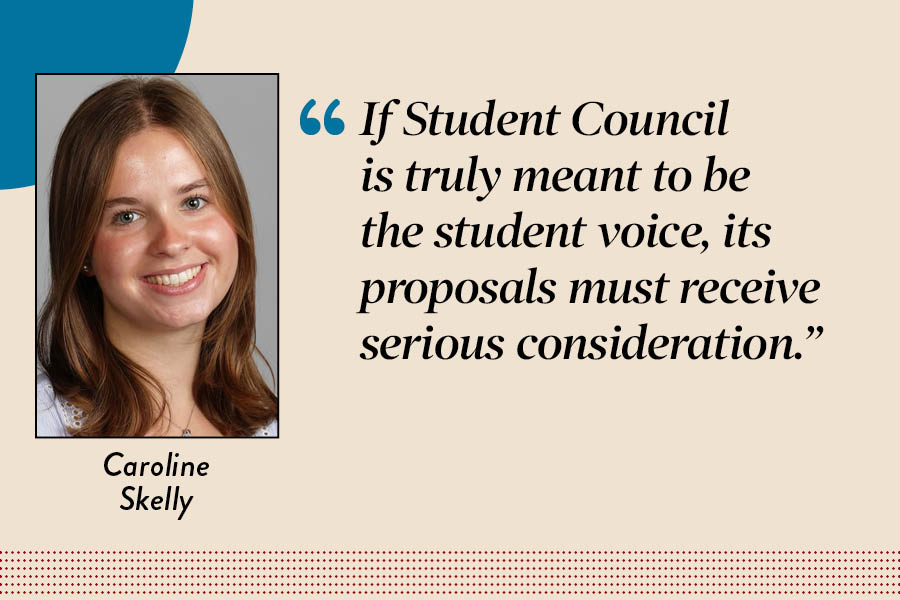
If Student Council is truly meant to be the student voice, its proposals must receive serious consideration. Faculty committees should engage in collaboration with Student Council to ensure that student voices are respected, included in decision making and reflected in the changes candidates were elected to achieve.
