




















Standing in the food service area of Café Lab rests a white, octagonal tower with bright green plants peeking through each vertex. The LED light in the middle of the tower illuminates the surroundings, and the sound of nutrient solution running through the pipes provides a soothing melody amid the noise of the lunch room and the inquiries of lower school children.
It’s not just any gardening project, it’s a new hydroponics tower system that grows food for the cafeteria.
Middle schoolers in the home economics class manage this tower to understand where their food comes from in a way that is better for the environment and eventually use the plants for cafeteria meals.
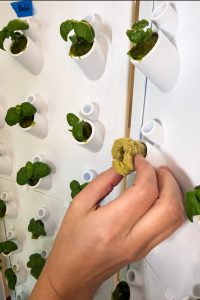
Hydroponics is a method of growing plants with a nutrient solution, instead of soil. The plants grow in rockwool, a growing medium with a texture similar to insulation. This material allows the absorption of nutrient solution and oxygen into the plants’ roots. The broad spectrum light in the center of the tower provides the light for plants to fully grow indoors without sunlight.
Ruthie WIlliams, middle school home economics teacher, has already been growing plants hydroponically in sock-covered mason jars under lights. Through its success, she knew her middle schoolers had enough experience tackling the hydroponics tower.
“I really wanted the students to do as much as possible,” Ms. Williams said. “They had specific roles in the project — like, head horticulturist was the kid who was in charge of placing the plants in.”
They have taken on the majority of such work with independent planting and maintenance, with light supervision from Ms. Williams and Spencer Bibbs, a supervisor at Extended Day, who also keeps an eye on the tower in the evening. He built a miniature hydroponic system, bringing the learning to younger children at Extended Day.
In exchange for learning opportunities, the produce grown will continuously supply the salad, pizza and sandwich stations in the cafeteria. Joseph Rotenberg, a seventh grader, took care of the system during class to check the health of plants, and if the nutrients and pH level were correct.
“It’s really cool knowing that you’re growing your own food and that other people can eat it,” Joseph said.
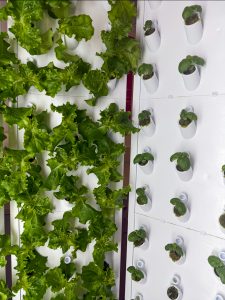
The tower now grows a variety of produce: flowers, corn, collard greens, cucumbers, lettuce and basil.
“When we harvest these, we’ll plant new ones there and keep a continuous cycle of production going so that we can keep producing food to eat,” Ms. Williams said about a practice called succession planting.
This project is an extension of the seventh graders’ quarterly field trips to Plant Chicago, a nonprofit organization that teaches students about the life cycle of a salad.
Lab is not the only school to have adopted this hydroponic system. HandCut Foods has similar
programs at other Chicago schools. Ray Griffin, food and service director for Lab, bought the hydroponic tower from Fork Farms hoping to improve student’s curriculum while being sustainable, lowering food costs and reducing the travel needed to transport food.
“There is a saying that ‘if you give someone a fish, they’ll eat for a day, if you teach them to fish, they’ll eat for the rest of their lives,” he said. “That’s what we want to do.”
Waiting in line for a Margherita pizza topped with bright-green basil leaves, the sound of running nutrient solution leaves a reminder of the origins and the hard work it took to grow the food inside of the cafeteria.
