






















When I entered high school, all my peers seemed to have their futures already mapped out. They knew which careers to pursue and what clubs to join.
At 15, I already felt behind. I enjoyed almost every class and didn’t know what I wanted to be. When I read “Range” by David Epstein, I realized being a generalist is a superpower, not a weakness.
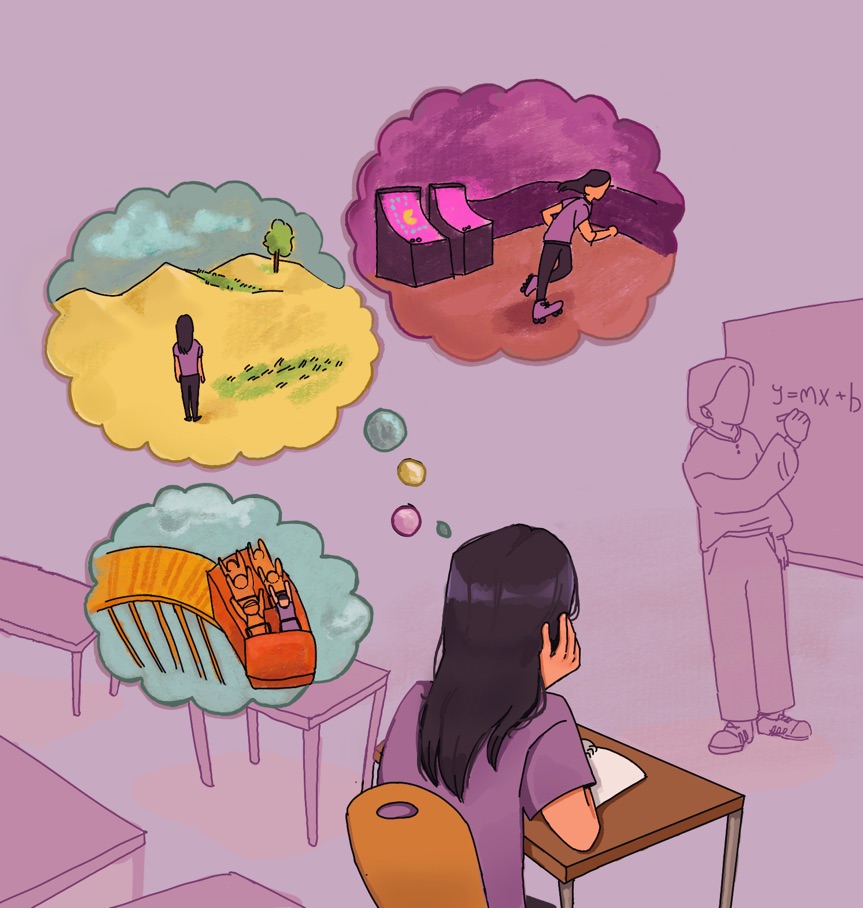
Students are feeling pressure to figure out their futures at increasingly younger ages, perhaps because of the competitive nature of U-High and the desire to craft impressive college applications. In accordance with Epstein’s argument and my own experiences, I believe that young people should choose to experiment in multiple areas of interest, rather than specialize in a niche subject early.
Epstein discusses how the media has trained people to associate “genius” with “specialization.” For example, Tiger Woods, considered one of the best golfers in the world, first began swinging a golf club when he was only two years old. Epstein argues that early specialization only works in “kind learning environments” with clear boundaries and rules, and that Woods’ success is the “exception, not the rule.” Most geniuses do not specialize early and have various hobbies. Epstein notes that “Nobel laureates are at least 22 times more likely to partake as an amateur actor, dancer, magician, or other type of performer.”
Epstein argues that having an early professional focus erases one of humans’ greatest strengths: the ability to problem-solve and create connections across fields. In his 2005 Stanford commencement speech, Steve Jobs, the Apple cofounder, mentioned a calligraphy class he randomly decided to take, noting, “If I had never dropped in on that single course in college, the Mac would have never had multiple typefaces or proportionally spaced fonts.” While calligraphy and computer design may seem unrelated, this experience demonstrates how exposure to diverse domains can encourage human creativity and problem-solving.
Epstein doesn’t assert that one should never commit to an interest, just that it should come after undergoing various learning experiences. According to an article by the Student Research Group, 80% of college students change majors. An article by Apollo Technical noted that 29% of people end up working in a different field from their area of study in college, suggesting that it’s important that students are equipped with diverse skills.
In a world that rewards early achievement, students are often pressured to focus on their strengths. But choosing a career at 17 is not always realistic and should not be the goal. Instead, we should take advantage of this time and use it to explore different areas across the arts, sciences and humanities. By choosing to have “range,” we are not falling behind. We’re equipping ourselves with the toolbox to succeed later in life.

Ana Romero • Oct 30, 2025 at 10:09 am
Excellent article Naomi! I need to check out that book-thank you!