







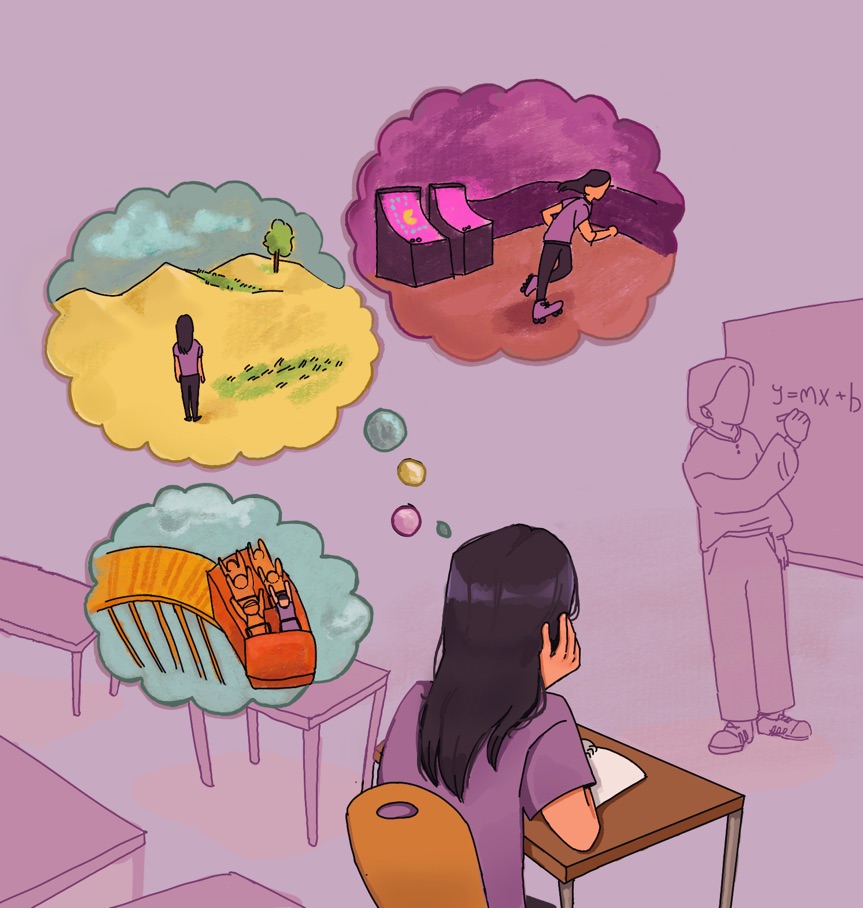









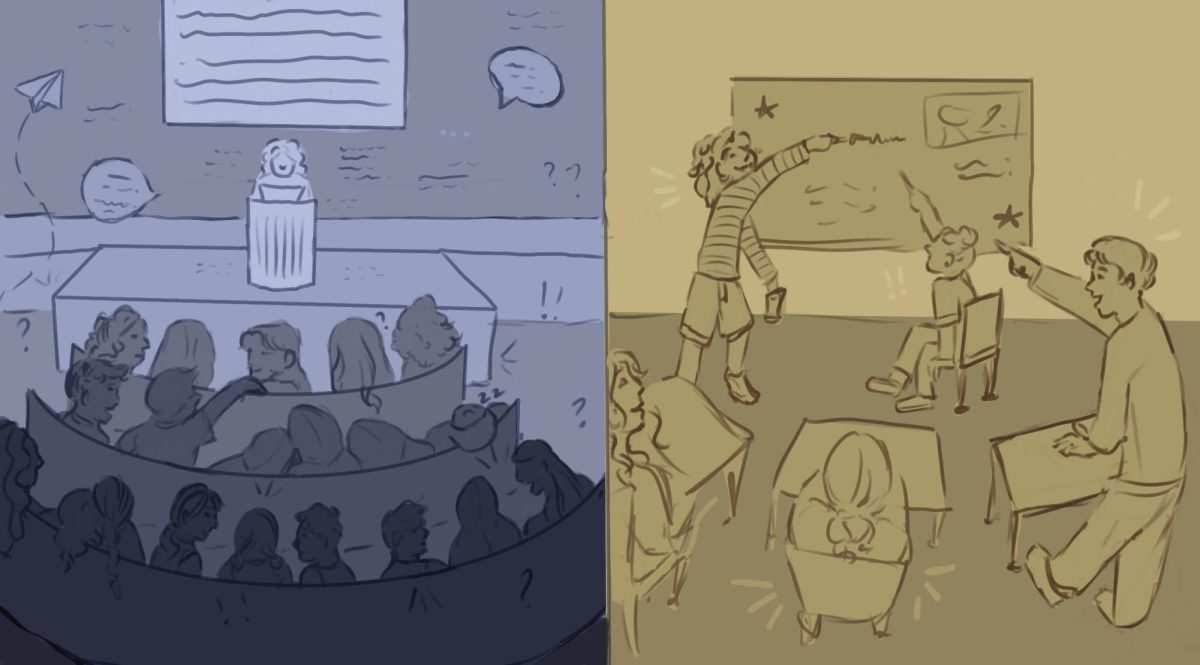
U-High students have historically been treated to two very different kinds of assemblies. In one recent assembly, after a long day of classes, students filtered into the assembly hall for a Google Slides presentation about procrastination. As the speaker went through the slides, students doodled, read and whispered with one another. The few paying attention were rewarded with a humdrum, monotone presentation.
Weeks later, in another assembly, a group of students walked into a small classroom, where their classmates were presenting about artificial intelligence-generated images. They focused on the group activity, raised their hands to discuss the prompts projected onto the board and left with a better understanding of how to identify AI “deepfakes.”
In a time of political turbulence and with some students feeling unsafe, regular assemblies, which are planned far in advance, should be replaced with more engaging assemblies to discuss current issues. This doesn’t mean we should drop all preplanned assemblies, but sometimes, it might be better to set aside something preplanned in favor of talking about current events.
By engaging students in assemblies that address current events, the entire student body can be further educated. With situations like the incident of racism that occurred Oct. 2 and the increased immigration enforcement activity, students need a place where they can feel safe discussing, as a group, what is happening in their own lives. Instead of relying on emails and websites — which students can easily ignore — assemblies can ensure every student understands the impact these events may have on their lives and the lives of their peers.
While there are Social Justice Week assemblies and diversity peer workshops, often the issues discussed have to do with general society or the city as a whole and not schoolwide issues.
When we have assemblies about current events, students focus more. It’s much harder to disregard assemblies about pertinent information and discussions than it is to ignore repetitive yearly assemblies on similar topics. In an assembly where students sign up to join smaller groups, more individual attention can be given to each participant and their concerns.
Most importantly, by talking as a school together about current issues, we can learn from one another. Through active discussion, students understand others’ perspectives. This is especially important as colleges begin to look for students’ ability to engage in proper dialogues through new programs. As of now, students are forced to rely on discussions within individual classes or among friends, despite the assembly slots available during the school year.
Slideshow presentations aren’t effective in instilling understanding of how to combat racism or address bullying. This is why it’s time to drop the slideshows and instead promote assembly formats such as Social Justice Week and ArtsFest, and aim them at current events. We must change assemblies from restrictive, pre-determined lectures to robust conversations that invite students to participate fully.