






















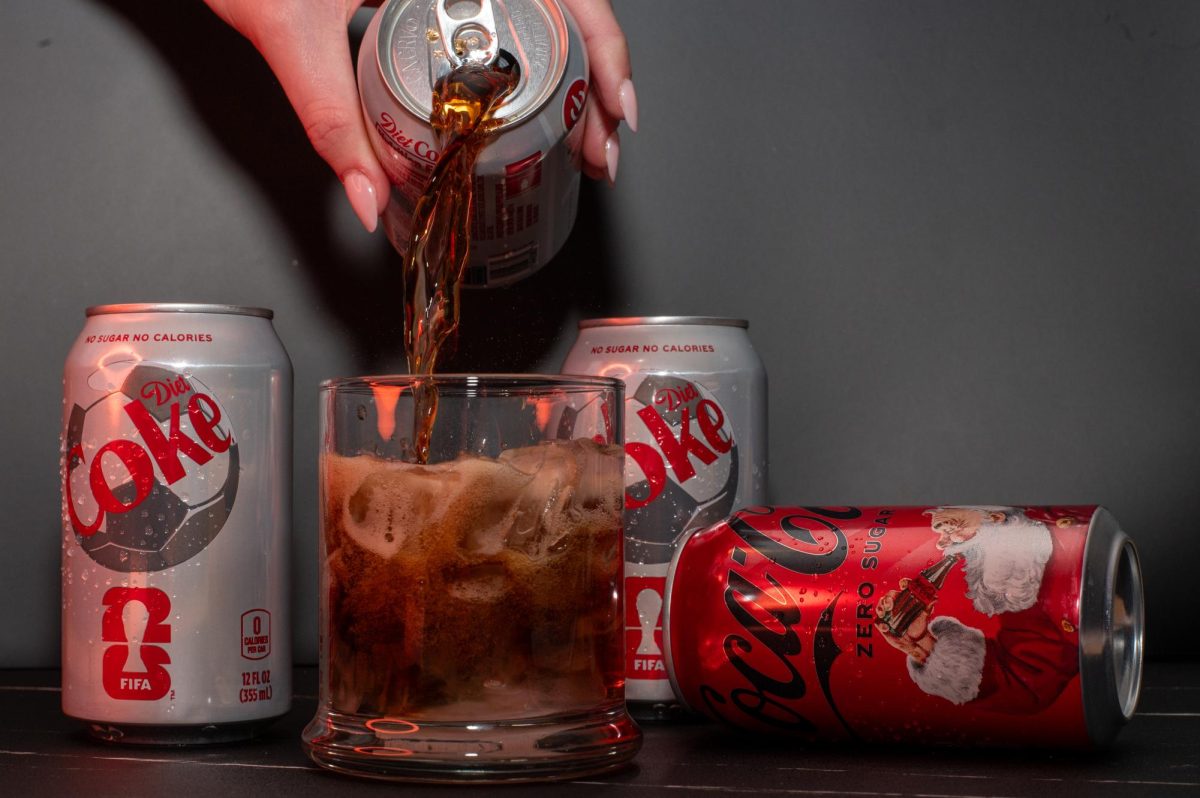
Since their invention in the 1880s, cola drinks, such as Coca-Cola and Pepsi, have been a global phenomenon. Featured as cultural icons and symbols of American capitalism, success and modernity, these drinks have been enshrined in American identity.
However, as health concerns relating to the excessive consumption of sugar have risen over the past few decades, sales of traditional sodas have slowed in favor of other drinks, including diet sodas which do not contain sugar or calories, but do contain artificial sweeteners and other additives.
While these additives are marketed as healthier, or even harmless, recent research published in the Journal of General Internal Medicine has shown a strong correlation with chronic illnesses such as cardiovascular disease, Type 2 diabetes, stroke and dementia.
Many students at U-High prefer the diet versions of sodas over the original. Jonah Chen, a junior, said that he prefers diet sodas, specifically Coke Zero, because of familiarity and the impression of comparative healthiness.
“Coke Zero, I think, is the best version of Coke, and I feel like people generally drink more Coke Zero than they do regular Coke,” Jonah said. “It’s probably just a psychological thing, since it says zero calories, so it feels more healthy. I grew up drinking it, so it just feels nostalgic, too.”
Mackenzie Musch, a dietician at UChicago Dining, said that people tend to see diet sodas as a healthier alternative, especially when considering weight management and weight loss, which is particularly prominent across social media.
“It’s something that you’re always thinking about, even people that don’t have diabetes or aren’t actively trying to lose weight. It’s still coming across their algorithms on their social media or they might be seeing it on news articles,” Ms. Musch said. “Since a lot of these weight loss methods just have to do with consuming less calories, people might assume that these lower-calorie options are going to be better for them.”
Ms. Musch emphasized that while she’s reticent to call any food good or bad explicitly, moderation should always be a main goal for a healthy diet. However, she pointed out that diet soda contains many additives that may be considered generally unhealthy such as high-fructose corn syrup, and aspartame, which can be considered safe when consumed in moderation.
“There are a lot of artificial sweeteners, so like, aspartame — that is going to be usually the sweetener that is in diet varieties of sodas — most of them are sweeter than just regular table sugar,” Ms. Musch said.
She also outlined several alternatives for people looking to cut back on soda consumption while not sacrificing the tastes that they enjoy, instead focusing on more naturally sweetened beverages.
“It’s not going to be very realistic for some people to just completely eliminate the things we enjoy, so we just talk about, OK, what would it look like for you to replace one of your Diet Cokes with a sparkling water that’s naturally fruit flavored,” she said. “It’s really about finding the properties that people like about sodas, whether it’s the caffeine, or the carbonation or the flavor.”
While diet sodas may be a good option for people looking to cut down on sugar and calorie intake, it’s beneficial to remain aware of the harmful aspects of diet soda. Understanding these complexities allows for each individual to make an informed choice of which soda they drink.