
















Junior Sarah Kaldelli doesn’t see a lot of romance at U-High. Growing up watching shows set in high school gave her high expectations for what high school love would look like. Not only have her expectations not been met, but even the couples that she does notice at U-High don’t express very much public affection toward each other.
Overall, romance at U-High seems sparse, but this phenomenon isn’t limited to our classrooms. Across the country, young people’s relationships are shorter-term and more undefined. Shifting social norms, the psychological toll of smartphones and social media, and lingering effects of the pandemic have converged to produce what researchers call a “dating recession.”
As the conservative-leaning Survey Center on American Life found: just over half of Gen Z adults said they had experienced a romantic relationship at any point during their teen years; from 1990 to 2014, the number of seniors in the United States who date in high school plummeted from 87% to just 58%, according to research published by the Society for Research in Child Development.
“I’m aware that some people are dating,” Sarah said. “Occasionally, I’ll see those people stand next to each other, or have a closer proximity than ‘normal friends.’ But overall, I feel like there’s a lot of people that I could never guess are dating.”
Gen Z’s waning interest in relationships is often attributed to the fact that they seem too busy to pursue a time-consuming relationship. Junior Isaac Sutherland is skeptical of that explanation.
“I think that there are some people that don’t engage with romance and relationships and cite academic pressure as the reason. But, knowing those people, I have a hard time imagining them not finding some reason,” Isaac said. “I think there is a lot of pressure in being in a relationship so it’s a good excuse for one to use, especially at Lab.”
Similarly, ninth grader Lillian Mathias has seen couples in the halls and outside classrooms, but they do not engage in the public displays of affection she learned to expect from portrayals of high school relationships in the media.
“A lot of times, TV shows tend to dramatize relationships in high school a little bit more, but I would say that I feel like at Lab, it’s a little more low-key,” Lillian said.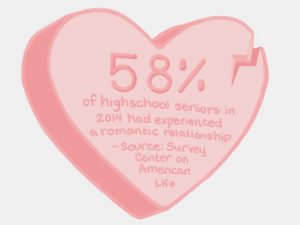
Part of what’s shaping the decline in formalized relationships is terminology itself. The available vocabulary around relationships has ballooned.
“I feel like all these terms: hookup, situationship, talking stage — people complicate things,” Sarah said. “It kind of lessens romance.”
Isaac agrees, finding much of Gen Z’s relationship lingo highly amusing and inherently bizarre.
“It’s kind of a meme on the internet – that people will be in a talking stage for a year, that you get married, have a kid, and you’ll still be in a talking stage.”
In 2024, Tinder’s “Year in Swipe” report introduced the term “nano-ships” to describe incredibly brief romantic connections, such as a meaningful glance or a single text. Younger singles, those aged 18 to 34, are driving this trend by prioritizing these short, “emotionally meaningful” moments over traditional, long-term commitment.
Isaac pointed to social media and television as another possible factor. He believes teenagers seek relationships less because TV and movies provide artificial emotional fulfillment.
“People are exposed to so many relationships online,” he said, “that a lot of that itch is being scratched through perceiving it in other people.”