





















The teen romance movie ruled the late 20th century. From John Hughes to John Cusack, here are some classic takes on the genre.
“Grease”— 1978
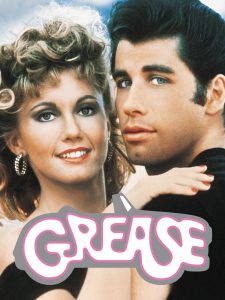
Perhaps the original high school romance, “Grease,” at its core, is a spectacle. Transfer student Sandy discovers that her summer fling, Danny Zuko, is a notorious greaser at her new school. The two proceed to dance and sing their way through various contrived conflicts before inevitably coming together. Made in the ’70s, the film ultimately serves as a nostalgic love letter to 1950s America. The most common 21st century complaint is that Sandy must transform herself into a scantily clad greaser-girl, deferring to Danny’s desire, before she gets her happy ending. Yet this transformation gives Sandy a certain kind of power and an ownership over her sexuality that may resonate even more in 2026 than it did in 1978.
“Pretty in Pink” — 1986
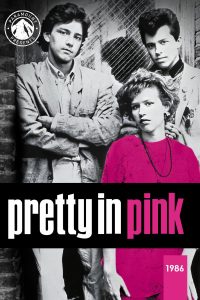
“Pretty in Pink” features all the ingredients for a classic teen rom-com: a love triangle, a band of misfits and Molly Ringwald at her peak. That the film lacks real momentum is almost inexplicable. Andie’s longing for the popular, affluent Blaine is too archetypal to truly strike a chord. When she chooses Blaine over her wacky best friend Duckie, the viewer is mostly tempted to roll their eyes. More than anything, the movie feels like a window onto 1980s alternative culture. Its title is drawn from a Psychedelic Furs song and Andie spends most of her time moping adjacent to a looming poster of The Smiths — it’s a testament to the decade.
“Say Anything” — 1989
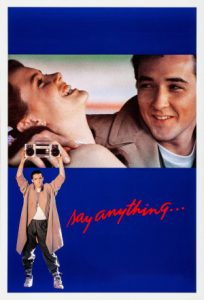
I’m still waiting for someone to explain why the IRS — Internal Revenue Service — is a major player in this high school rom-com. Cameron Crowe’s directorial debut is devoid of any semblance of internal logic. Love-struck loser Lloyd Dobler collides with the straight-laced Diane Court for little reason beyond apparent mutual attraction. They are inexplicably ripped apart by familial conflict when Diane’s father is investigated for tax fraud — although why this shocking reveal necessitates their break up remains perpetually unclear. Despite its surreal quality, “Say Anything” is a joy to watch. John Cusack holding a boombox below Diane’s bedroom window in the dead of night was a watershed moment for high school romance, and I was giddy for the film’s entire 100 minutes.
“But I’m a Cheerleader” — 1999
“But I’m a Cheerleader” is the ultimate satire. Strikingly, the film manages to simultaneously skewer suburban parents and affirm thehumanity of its wonderfully ludicrous characters. It follows — you guessed it — a cheerleader named Megan whose parents stage an intervention. Rather than substance abuse, they accuse her of homsexuality, and Megan is shipped off to the Technicolor camp True Directions, under the watchful eye of Mike (RuPaul). Inevitably, she falls in love with her proverbial fellow inmate and executes a daring escape. At the close of the 20th century, a queer comedy in and of itself was particularly bold. “But I’m a Cheerleader” is radically ridiculous. Walking in the footsteps of “Heathers” and “Cry Baby,” director Jamie Babbit executed something entirely original.
“10 Things I Hate About You” — 1999
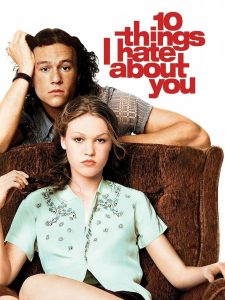
Contributing to a long line of Shakespearean-themed high school romance, “10 Things I Hate About You” adapted “The Taming of the Shrew” for the era of low-rise cargo pants and butterfly clips. Kat — a jaded feminist shrew — and her angelic younger sister, Bianca, are perpetually at odds. Unfortunately, their overbearing gynecologist father has declared that Bianca can’t date until Kat does, creating momentum for the myriad misunderstandings that follow. The movie thrives as its lead characters wield witty one-liners and meaningfully raised eyebrows to convey both intimacy and disdain.