

















On the bustling patient floors of the University of Chicago Medical Center, a harpist calmly plucks the strings of her instrument, producing a melody that calmly drifts into patients’ rooms and dulls the beeping of the machines and the uncertainty that lives on the floor.
A couple blocks away, junior Josiah Sklarsky puts on his headphones and presses play on his hip-hop playlist during his fifth period free. A similar calming effect envelops him, and as the melody of the fast-paced music takes over, stress and anxiety from the day slowly slips away.
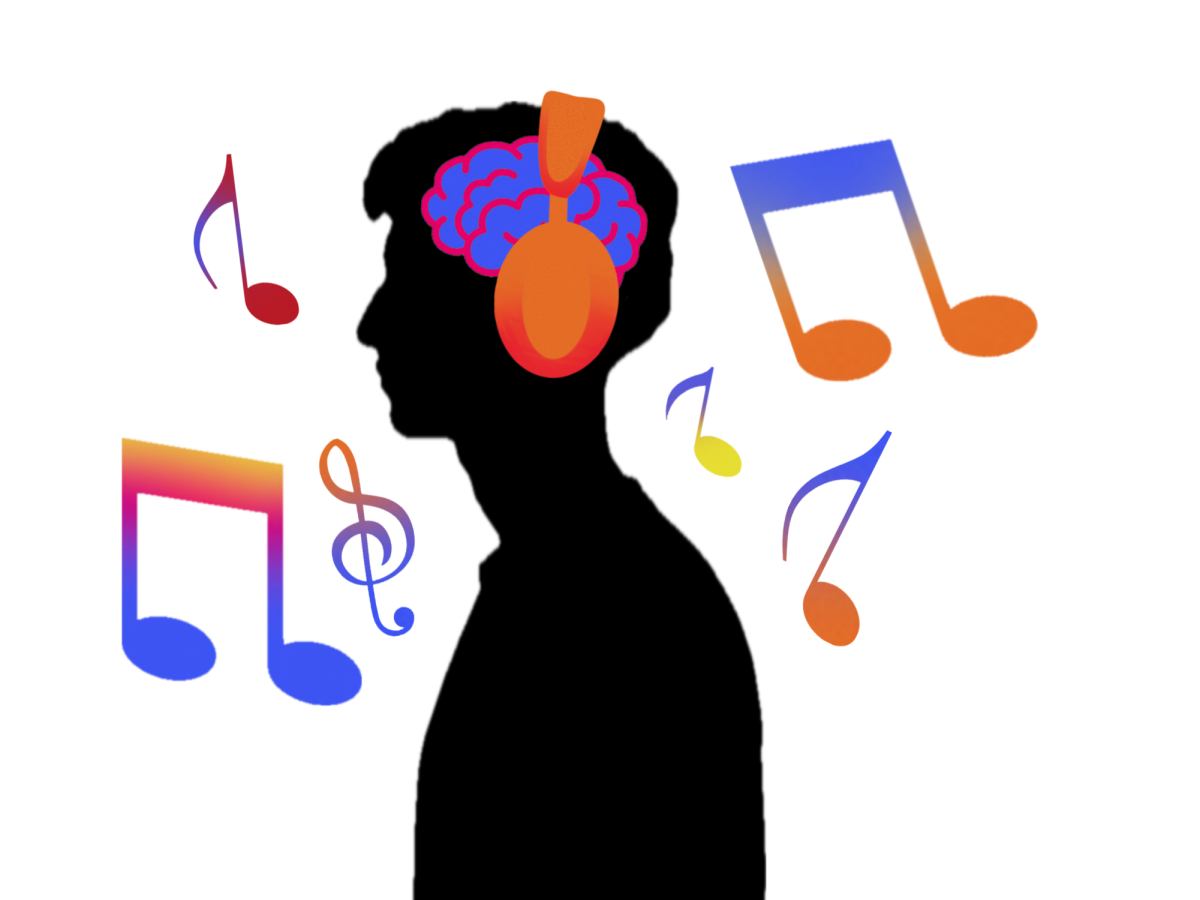
From the corridors of hospitals to U-High lounges, music has become more than just a form of entertainment, it has become a way to manage stress, lift moods and, as research shows, improve mental health outcomes.
A 2017 study from the Cochrane Review about music therapy’s impact on depression symptoms found that music therapy provided short-term benefits to individuals with depression, and when combined with more traditional treatments, music therapy improved depressive symptoms significantly more than previous methods of treatment. Music therapy also decreased anxiety levels and improved overall functioning in patients with depression.
For Josiah, both listening to music and creating it serve as powerful de-stressors, and he sees a significant improvement in his mood when he listens to music.
“I’ve always loved music, and there’s always, like, songs that I listen to that I can find somebody who relates to me in a similar situation that I’m going through, or I can just get pumped up,” Josiah said. “There’s always a right song to find for a mood that can help you out.”
U-High counselor Teddy Stripling believes that listening to music positively impacts mood and mental well-being, and is just as important in mental health as sleep, exercise and social connection.
“If we’re listening to music that uplifts us and gives us energy, think about in the morning or after school or before you go to the gym,” Mr. Stripling said, “it can be really useful when trying to get your energy level up, so music has the ability to do that.”
At the UChicago Medical Center, the Healing Arts Program, started 20 years ago by Monica Hork, coordinates 30 concerts every month in all genres of music for the hospital’s patients and staff. The goal of the program is to use art and music as a way to comfort and support patients. Ms. Hork sees a strong correlation between music and mental health, and is currently curating an educational exhibit for the hospital titled “Music as Medicine” with research material from the Johns Hopkins University international arts and mind lab, which she is a part of.
“Many, many departments are on board with music here on campus because they hear anecdotes from patients, visitors and staff about how much it’s enjoyed and appreciated,” Ms. Hork, healing arts coordinator, said. “I just kind of built a case around music having its place here and how it could impact the services that are provided and the care that’s provided.”
Whether drifting through hospital hallways or in the headphones of U-High students, music continues to have the power to heal and help.