
















In his lecture on “The School and the Life of the Child” John Dewey wrote, “Learning? — certainly, but living primarily, and learning through and in relation to this living.”
Mr. Dewey conceived The Laboratory Schools as an experiment.
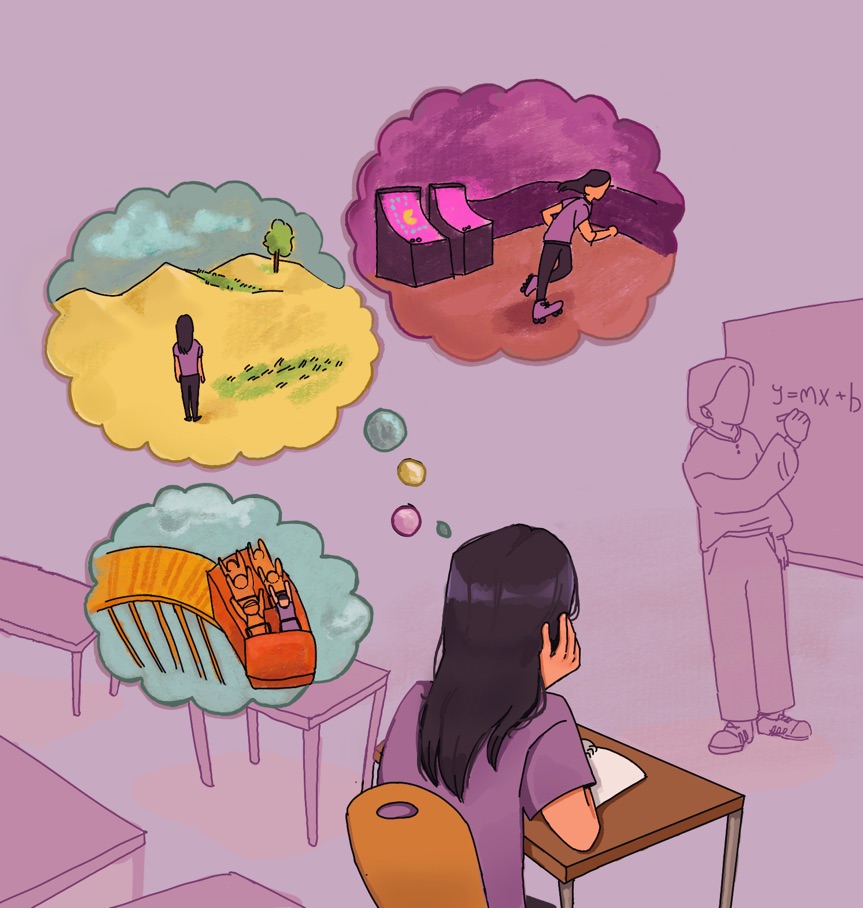
He sought to situate education within life. Information was designed to survive beyond the exam because it was concerned with living. In other words, the classroom did not act as a vacuum — a space isolated from real-world concerns and influences.
Opinions are part of life, and so they should necessarily be part of education, at least according to Mr. Dewey.
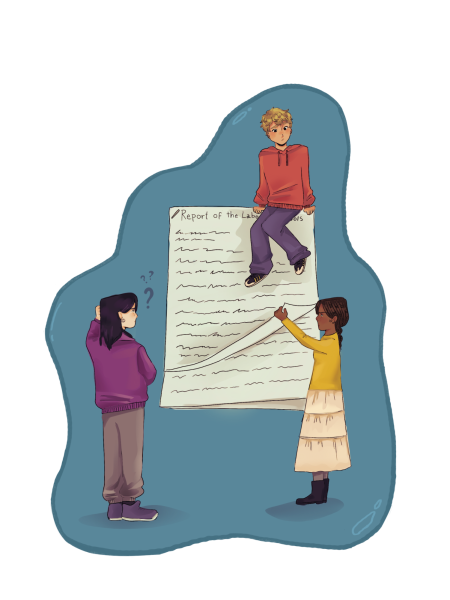
The recent report of the Committee to Review the Laboratory Schools deviates from this value. The committee was clear: Lab has deteriorated — and U-High by extension. We have strayed from the university’s principles into territory that is ideological and prescriptive.
In their own words, academic freedom “does not mean that teachers or leadership are free to advance their own personal viewpoints on contested social, political, or ideological questions in the classroom or shared spaces.”
In some ways, these claims offer valuable insight. It is difficult to deny that our school has become, at least in appearance, politically homogeneous. In that context, teachers hold the power to shape students’ opinions. The younger they are, the less likely a Lab student will feel confident disagreeing with their instructor. Any form of that educational dogmatism runs wholly counter to both Dewey’s and the university’s models of inquiry-based education.
However, the solution is not, as the report recommends, to ask educators to perform neutrality. In fact, it is a desertion of Mr. Dewey’s principles to wield the threat of bias as a tool to curb instructor independence.
Teachers are people. They inevitably have viewpoints. An educator’s duty lies in creating environments where debate is possible through mutual trust and shared guidelines — not the false premise of neutrality. When an instructor is forced to tiptoe around their own opinion, they run the risk not only of being unable to engage in discussion but also of presenting information inevitably informed by their opinion as if that information is objective.
Curriculum and discussion are influenced by a teacher’s opinion at countless junctures: class readings, assignments, prompts and questions. The key is for educators to own their opinions but make clear those opinions are subjective positions, not facts.
When we can engage with our teachers as interlocutors as well as instructors, we practice exactly what Mr. Dewey preached: to learn by doing.
After all, who can model respectful disagreement if educators are not permitted to disagree?