
















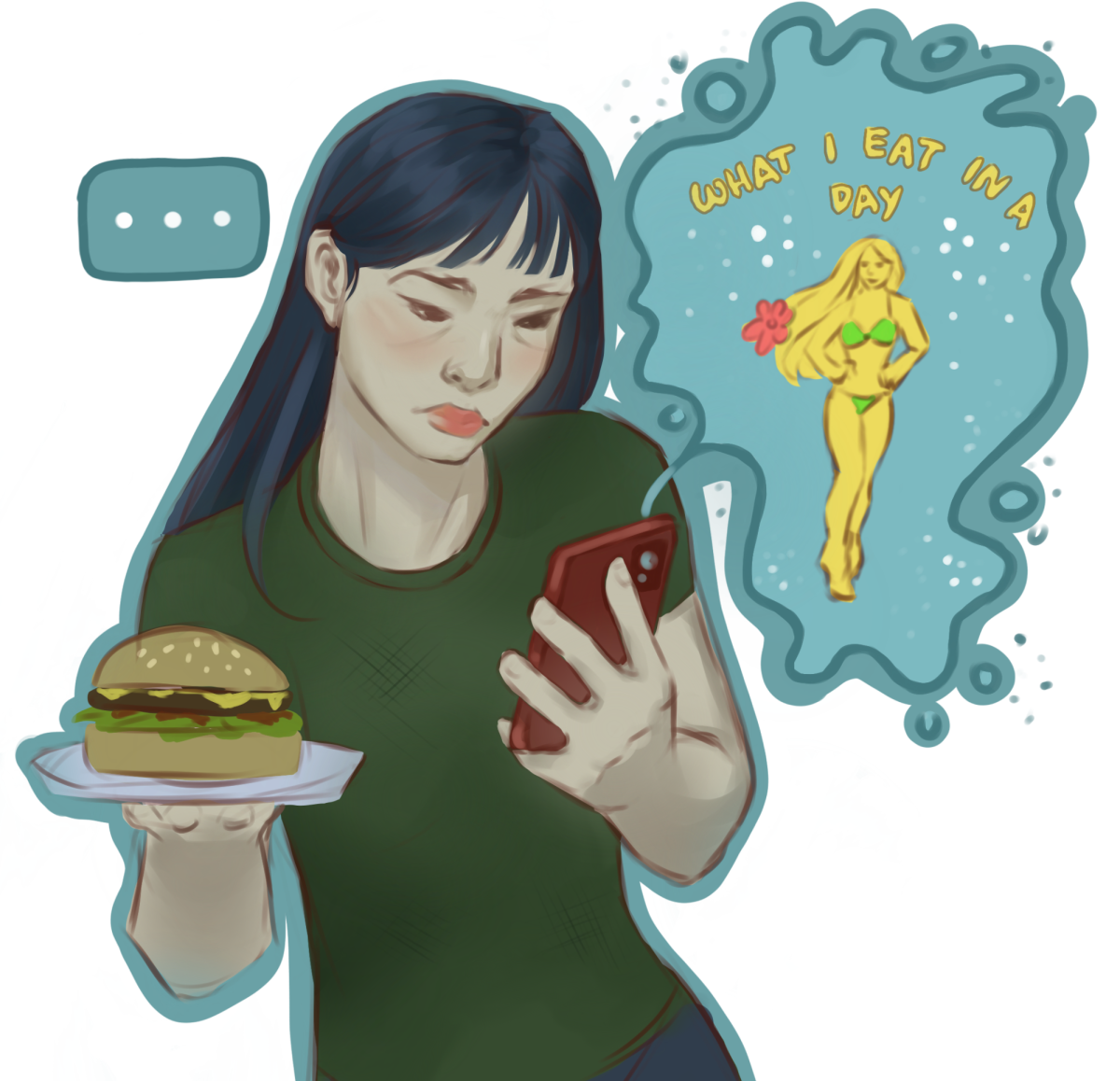
Fifteen-second ab workouts. Diet-tracking videos. Drinks that promise to “melt fat.” From Tumblr’s “Thinspo” communities to Twitter’s notorious Pro-Eating Disorder threads, social media has become prescriptive: a single search for “skinny” pulls up thousands of photos of slim bodies and posts encouraging everyone that they can always get slimmer. On Pinterest, searching “skinny” even surfaces an image urging, “Don’t ever stop trying. One day, you will be thin.” In a social-media-driven era, diet culture has only gotten more toxic. Trends like “What I Eat In A Day” or “A Day In My Life” exist across platforms, occasionally promoting extreme weight loss as a form of wellness or self-care, often presented as “fun,” “easy” or “empowering.”
A 2025 study from the Journal of Youth and Adolescence found that “appearance activity” on social media, like browsing or posting photos, predicted increases in body dissatisfaction as watchers consume more and more media. Senior Daniel Wu sees this phenomenon in his TikTok “For You” page.
“If I see a really jacked man online I think, ‘dang, I need to lock in’,” Daniel said, “Which I definitely think was a result of an overconsumption of those kinds of videos. But when I see someone eating really healthy, it makes me think I should be doing the same.”
Even though Daniel doesn’t seek out fitness or diet influencers, his feed still occasionally presents him with dieting videos and exercise routines pushed out to millions of other watchers.
“There are people out there online who glorify eating half a cucumber and a bowl of eggs a day,” Daniel said. Senior Aarna Arora also watches these videos but focuses more on recipes and meal advice. As a vegetarian, she uses “What I Eat In A Day” content to see how others eat healthier and said she enjoys the balanced lifestyle they promote.
“They put things into perspective for me,” Aarna said. “For me, it’s not like ‘oh okay, eat less,’ it’s more about watching what you are eating and not eating an excessive amount.”
According to the National Library of Medicine, those who spend over three hours daily on social media are twice as likely to develop eating disorders than those with less screen time. In 2025, TikTok banned “SkinnyTok,” a hashtag used on the app under which people posted videos idealizing extreme thinness, that has been likened to the pro-anorexia sites that circulated the web in the early 2000s. Though such darker sides of TikTok exist, there are also a group of creators who promote body positivity online. One creator, Spencer Barbosa, posts content where she discusses and shows body hair, stomach rolls and other ‘imperfections’ in order to spread realistic eauty standards.
Brooklynne Webb, known online by the username XOBrooklynne, also helped popularize TikTok’s “Tummy Out” trend, where creators posted videos targeted mostly to younger audiences with their stomachs out to normalize all body types.
Aarna said some of the videos she sees on TikTok help her focus on eating more healthy meals. She said these videos likely have a positive impact on younger audiences by showing how they can get the calories that they need while still staying nutritious. However, Daniel also said that while there are body-positive videos online, it is still hard not to swipe through video after video of creators slim bodies.
“It’s hard when you’re younger,” Daniel said. “I had middle school during COVID, and that was even worse because I had unrestricted internet and was kind of isolated from the rest of the world. And when you’re on social media, you see these things on TikTok or Twitter, and it creates this echo chamber where you’re kind of like, ‘Oh, this is how I have to eat, this is how I have to live my life.’”